



 Prof. Bisrat Hailemeskel and Dr. Fekadu Fullas discuss Ethiopian herbal traditions, natural healing, and the intersection of cultural knowledge and modern science in their new book Home Remedies A–Z. (Courtesy photo)
Tadias Magazine
May 2026
New York (TADIAS) — Interest in natural remedies and traditional wellness practices continues to grow worldwide, including among younger generations seeking more holistic approaches to everyday health. In their new book, Home Remedies A–Z: Natural Therapies for Your Family, Prof. Bisrat Hailemeskel and Dr. Fekadu Fullas combine modern pharmaceutical knowledge with herbal remedies and healing traditions familiar to many Ethiopian households.
Organized as a practical guide for everyday readers, the book explores natural approaches to common conditions while also emphasizing safety, scientific evidence, and the importance of knowing when professional medical care is necessary.
In the following Q&A with Tadias, the two authors discuss Ethiopian herbal traditions, balancing cultural knowledge with evidence-based medicine, preserving intergenerational wisdom, and why more people today are turning toward natural wellness practices.
Q&A: Prof. Bisrat Hailemeskel and Dr. Fekadu Fullas on Ethiopian Herbal Remedies, Natural Healing, and Home Remedies A–Z
TADIAS: Congratulations on the publication of Home Remedies A–Z: Natural Therapies for Your Family. What inspired the two of you to write this timely book, and why did this feel like the right moment to share it with a wider audience?
The idea came from a gap we observed in both clinical practice and everyday life. Many people already use home remedies, but often without clear guidance on safety, preparation, or effectiveness. At the same time, there is growing interest in natural health solutions. This felt like the right moment to bring together traditional knowledge and modern scientific understanding into one practical guide. For example, instead of vague advice, we provide structured remedies such as the use of roasted and ground coffee mix with honey to for nausea and mild dyspepia or indigestion, Nettle – ሳማ (Urtica dioica) to lower blood sugar, and turmeric-based preparations for inflammation—along with clear instructions and precautions.
TADIAS: The book places special emphasis on herbs and remedies traditionally used in Ethiopian households. Growing up, were there specific remedies or practices that stayed with you and influenced your thinking about healing and wellness?
Yes. Many remedies in the book reflect what we experienced growing up—using ginger for stomach discomfort, fenugreek for metabolic health, and garden cress for respiratory or general wellness. One example included in the book is the traditional use of fresh garlic for superficial fungal skin infections (locally known as ጭርት). In many households, a clove of garlic is cut in half and gently rubbed over the affected area. This practice likely has a scientific basis: garlic contains bioactive sulfur compounds such as allicin, which have demonstrated antifungal and antimicrobial activity in laboratory studies. Such early experiences shaped our respect for traditional practices, while later training helped us evaluate them scientifically.
TADIAS: One of the most interesting aspects of the book is the effort to bridge traditional knowledge with modern scientific understanding. How do you approach balancing cultural wisdom with evidence-based pharmacy and medical practice?
We treat traditional remedies as a starting point, not the final answer. Each remedy is evaluated based on pharmacological plausibility, safety, and available evidence. For instance, cranberry juice is included for urinary tract infection because there is clinical support for preventing recurrent infections, while other remedies are presented more cautiously when evidence is limited. We also highlight risks, such as potential interactions between herbal products and prescription medications.
For example, grapefruit is well known to interact with certain medications, particularly a group of blood pressure drugs called calcium channel blockers, such as amlodipine. Compounds in grapefruit can inhibit the enzyme system (especially CYP3A4) responsible for breaking down these drugs in the body. As a result, the medication may accumulate to higher-than-expected levels, increasing the risk of side effects such as low blood pressure, dizziness, or swelling.
TADIAS: Many people today are interested in natural remedies but may feel overwhelmed by misinformation online. What was most important to you in making this book practical, safe, and accessible for everyday readers?
Structure and clarity were essential. Each condition follows the same format: causes, symptoms, when to seek professional help, and then practical remedies. For example, for urinary discomfort, we include cranberry juice with guidance on appropriate use, hydration, and warning signs that require medical care. For low blood pressure, we discuss simple measures like fluid intake and dietary adjustments. The goal was to make the information usable, not just informative.
TADIAS: The subtitle “From My Family to Yours” gives the book a very personal and community-centered feeling. How important is family knowledge and intergenerational learning in the preservation of healing traditions?
It is very important. Many remedies—such as using honey for cough relief or herbal teas for digestion—are passed down informally, including practices like eucalyptus oil inhalation to help clear clogged airways and loosen thick sputum. The challenge is that this knowledge can be lost or sometimes misapplied over time. By documenting these practices and refining them with scientific input, we aim to preserve what is useful while improving safety and consistency.
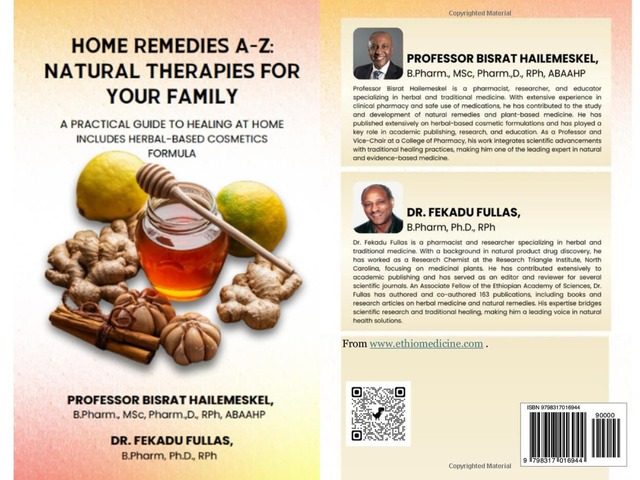
Book cover: Home Remedies A-Z: Natural Therapies for Your Family — A Practical Guide to Healing at Home: Also includes herbal-based cosmetic formulations by Prof Bisrat Hailemeskel and Dr. Fekadu Fullas. (Courtesy photo)
TADIAS: The book highlights several herbs commonly used in Ethiopia. Are there particular Ethiopian herbs or natural ingredients that you believe deserve greater international recognition or further scientific study?
Yes. Garden cress (feto), moringa, hibiscus (ከርከዴ), and dingetegna are strong examples. Moringa has growing evidence in metabolic health, hibiscus in blood pressure management, and garden cress shows promise in nutritional and inflammatory conditions. These plants are widely used in Ethiopian households, yet they remain underrepresented in global research relative to their potential.
TADIAS: In many cultures, home remedies are not only about treatment but also prevention and daily well-being. What role do you believe natural remedies can play in promoting healthier lifestyles today?
Their strongest role is in prevention and early management. For example, regular use of fiber-rich foods like flaxseed (ተልባ) can support digestive and cardiovascular health, while herbal teas can help with hydration and mild symptoms. These are low-cost, sustainable practices that can reduce reliance on medications for minor conditions.
TADIAS: What are some of the biggest misconceptions people tend to have about herbal medicine and home-based natural healing?
The most common misconception is that “natural” means safe. In the book, we give practical examples to address this. For instance, while apple cider vinegar is included in certain formulations, we emphasize proper dilution and caution due to its acidity and potential to irritate the skin or stomach.
We also highlight that many herbs can interact with prescription medications—particularly anticoagulants such as warfarin—increasing the risk of bleeding. For example, commonly used ingredients like garlic or ginger, when taken in large amounts, may cause dyspepsia and worsen gastric ulcer symtpoms. These examples reinforce a key point: natural remedies can be beneficial, but they must be used carefully, with attention to dosing, interactions, and individual circumstances.
TADIAS: This appears to be both a practical guide and a deeply researched reference. What was the writing and collaboration process like between the two of you while developing the book?
Dr. Fekadu Fullas has written several other herbal-based books that are available on Amazon. Prof. Bisrat Hailemeskel has also worked with many patients using herbal therapies for various conditions and teaches related topics at his university. For this book, the process involved first identifying common conditions, then selecting remedies based on both traditional use and scientific evidence.
For example, sections such as kidney stones (lemon water), arthritis (Epsom salt baths), gout (cherries), and urinary health (cranberry) were developed by combining lived experience with a careful review of the scientific literature. Each section went through multiple revisions to ensure clarity, accuracy, and safety.
TADIAS: Who did you primarily write this book for?
We wrote it for a broad audience. Ethiopian families will recognize many of the remedies, but the structured format makes it accessible to readers globally. It is also useful for students and healthcare professionals interested in practical, culturally informed care.
Importantly, the book goes beyond simply listing herbal remedies. Each condition includes a clear description of the disease, potential causes, signs and symptoms, and guidance on self-assessment at home. It also outlines when home treatment is appropriate and when to seek professional care. In addition, we provide possible home or herbal remedies, unique folk practices specific to Ethiopia, relevant lifestyle changes, and key precautions. In this way, the book serves as a comprehensive, practical guide rather than just a collection of herbs.
TADIAS: Why do you think more people are turning toward natural remedies today?
There are several reasons. There is growing concern about chronic diseases, medication side effects, and the rising cost of healthcare. Many people are also drawn to the availability and familiarity of natural remedies—these are often accessible, affordable, and have been used for generations in many cultures. In addition, there is a perception that they are safer and have fewer adverse effects, although this is not always true.
Another factor is that many modern medicines are derived from plant-based compounds, which reinforces the idea that natural products can be effective. At the same time, people today want to take a more active role in managing their health, focusing on prevention, lifestyle, and early symptom management rather than waiting for illness to progress.
TADIAS: Why was it important to include boundaries and cautions within the guide?
Because misuse can be harmful, and delays in proper care can have serious consequences. While home remedies can help with mild symptoms—such as cough, cold, or indigestion—they are not appropriate for more severe or persistent conditions. For example, several herbs help cold or other respiratory symtpoms; presence of blood in the sputum when may indicate serious conditions such as tuberculosis or lung cancer and requires immediate medical attention. Similarly, while flaxseed may help relieve mild indigestion, repeated vomiting or persistent symptoms could signal a more serious underlying illness.
In the book, we consistently emphasize clear boundaries under each condition—when home care is appropriate, when to stop, and when to seek professional evaluation. This approach helps readers use remedies safely while avoiding dangerous delays in diagnosis and treatment.
TADIAS: Beyond the remedies themselves, what broader lessons do you hope readers take away?
We want readers to think critically about health information, respect both tradition and science, and practice responsible self-care. Understanding when to act—and when to seek help—is a key message throughout the book.
TADIAS: Do you see books like this as part of preserving cultural knowledge?
Yes. Many traditional practices are at risk of being lost. By documenting them carefully—while also evaluating them scientifically—we contribute to preserving and improving this knowledge for future generations.
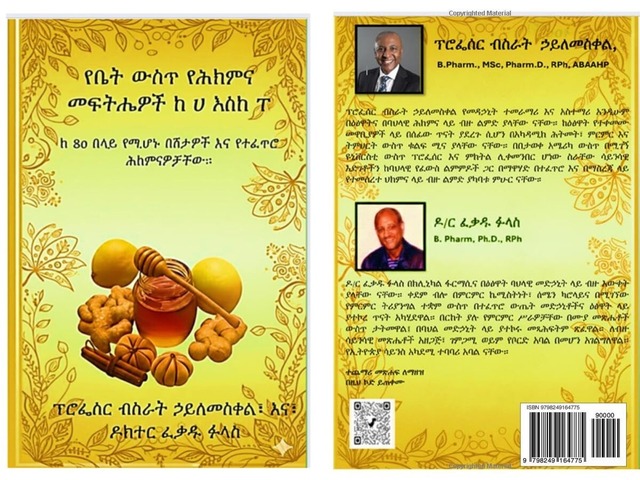
Courtesy photo
TADIAS: What are you working on next, and what conversations do you hope this book will inspire?
We are expanding into more focused guides and exploring opportunities for further study of selected remedies. We hope the book encourages families to share knowledge, ask questions, and approach health in a balanced, informed way.
In addition to continuing to update and expand this book, we are currently working on—and are close to completing—an English–Amharic medical and health dictionary. This project is designed to bridge communication gaps between healthcare providers and Amharic-speaking patients, making medical information more accessible and understandable. It reflects our broader goal of improving health literacy, supporting patient-centered care, and preserving language-specific medical knowledge for both current use and future generations.
—
Home Remedies A–Z: Natural Therapies for Your Family is available on amazon.
Join the conversation on Instagram, X and Facebook.