Archive for the 'News & Hot Shots' Category

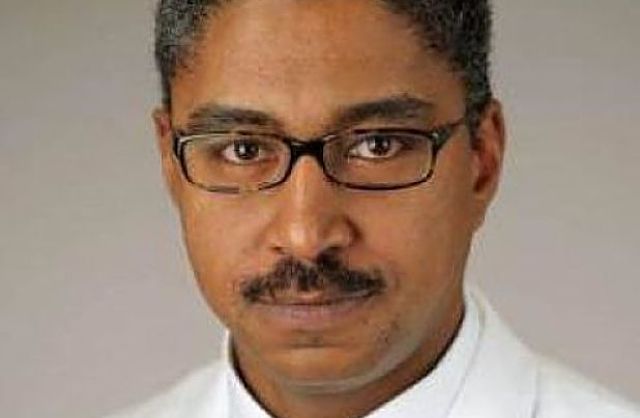
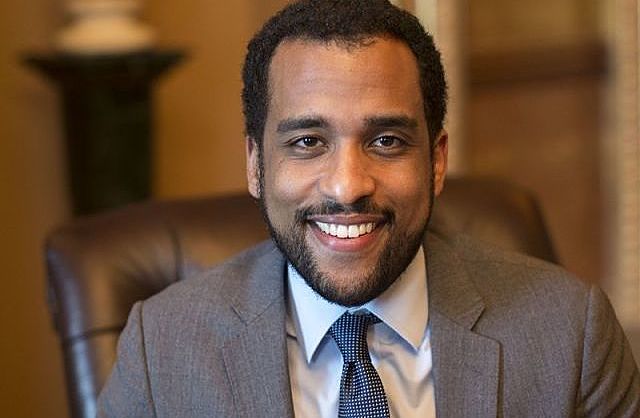
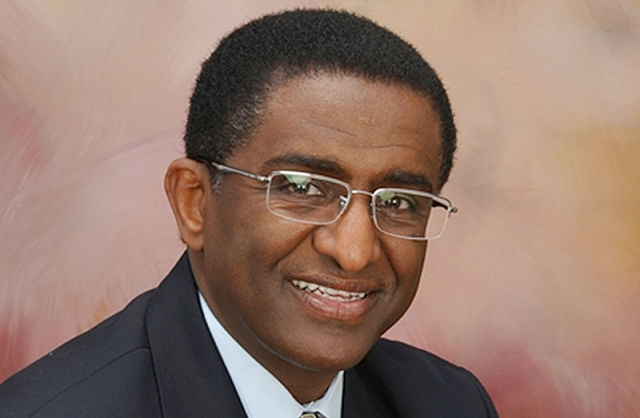
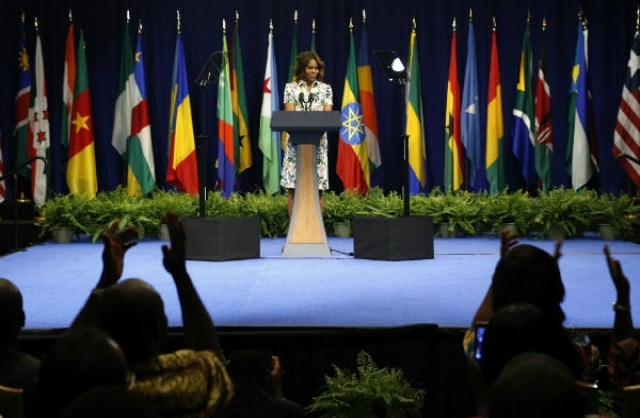
Dr. Mehret Mandefro, Mahmoud Ahmed to Headline 3rd GHCG Gala

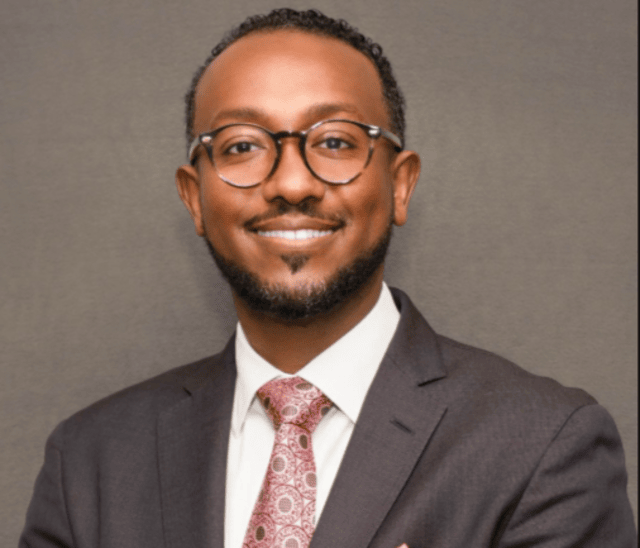
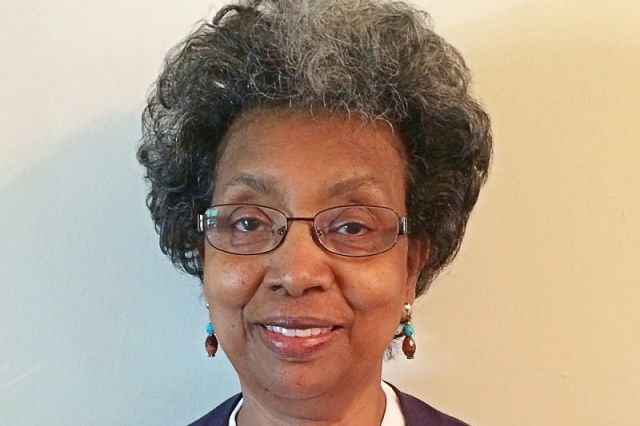
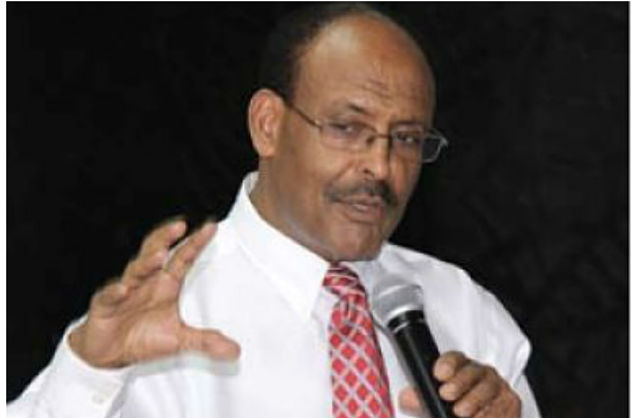
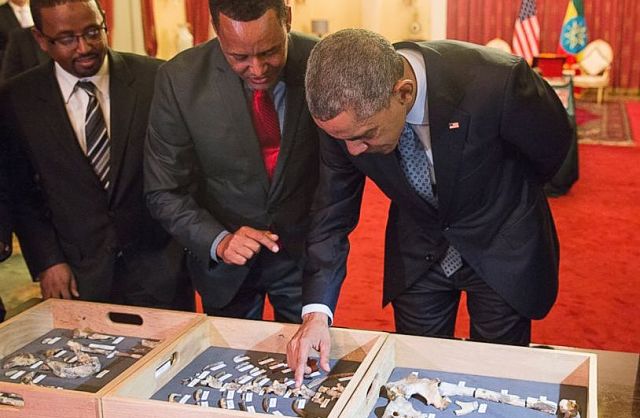
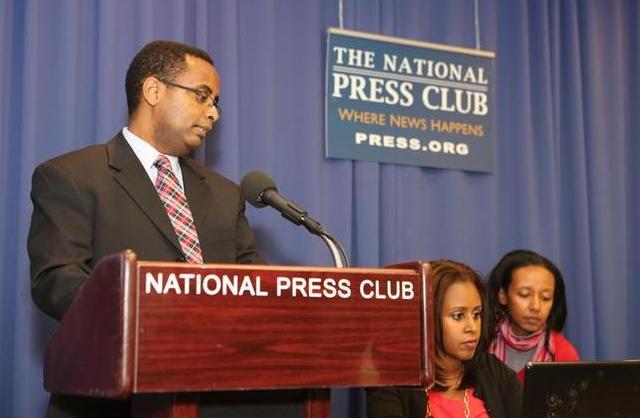
Above: Dr. Mehert Mandefro, member of White House Fellows
Class of 2010, will deliver the keynote address at the Gemini-
Health Care Group’s annual event, while the evening ‘s music
segment will be headlined by cultural-icon Mahmoud Ahmed.

Tadias Magazine
Events News

Updated: Friday, September 3, 2010

New York (Tadias) – The 3rd Annual Fundraising Gala for Gemini Health Care Group, a U.S. based NGO that focuses on providing pediatric medical services and professional training in Ethiopia, is scheduled to take place in Arlington, Virginia, on Saturday, September 25, 2010.

According to Zeithuna K. Ebba, GHCG’s Public Relations Officer, the upcoming event will feature inspirational speakers and plenty of entertainment. “We are honored to have Dr. Mehret Mandefro deliver the Keynote address,” Zeithuna told Tadias Magazine. “We are also very excited to announce that legendary singer Mahmoud Ahmed will grace the entertainment part of the evening.”

The PR Officer said the 2010 fundraiser will include live and silent auctions of paintings and other donated items. “The live auction will highlight works by a diverse group of international artists, including the New York-based Japanese portrait painter Kumiko Buller, who donated her favorite painting of young Obama,” Zeituna said. “Other participating artists include Dilip Sheth, Solomon Asfaw and Debebe Tesfaye.” The live auction will be hosted by the Maryland based multimedia marketing and promotional network, Tebabu and Associates.

According to the evening’s program, the gala will also honor neurologist Dr. Enawgaw Mehari, Founder and President of People to People (P2P).

If You Go:
3rd Annual Fundraising Gala
Gemini Health Care Group
Saturday, September 25, 2010 at 7pm
The Sheraton National Hotel
900 S. Orme Street,
Arlington, VA 22204
To RSVP call 914-826-6421
www.ghcg.org

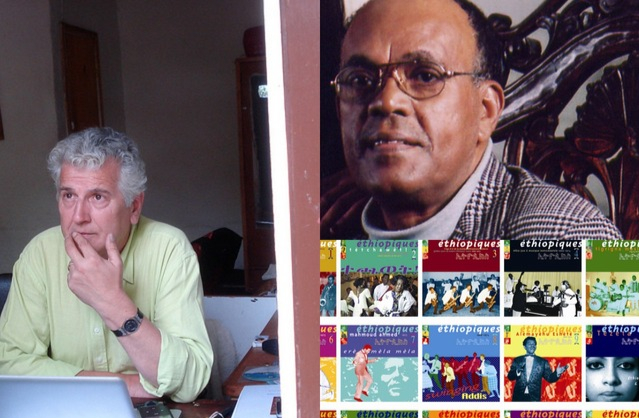
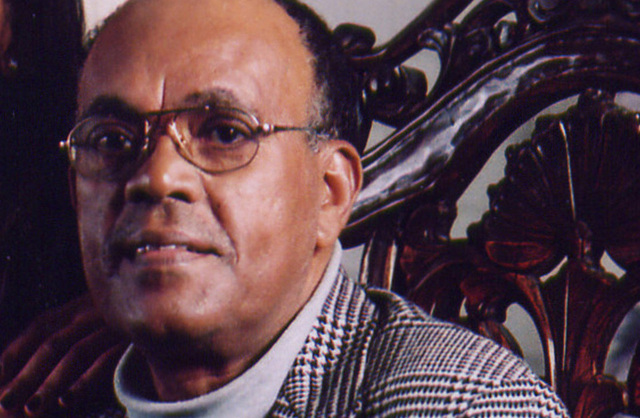
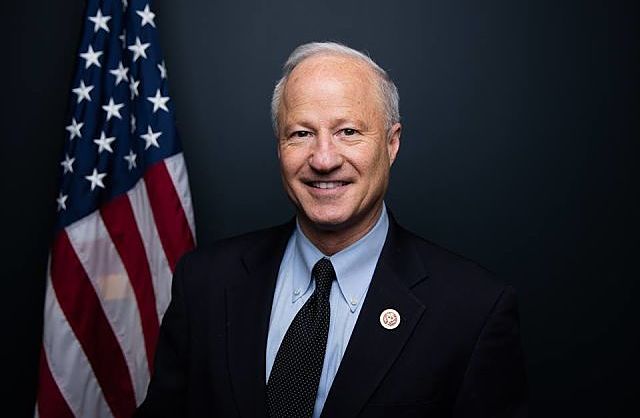
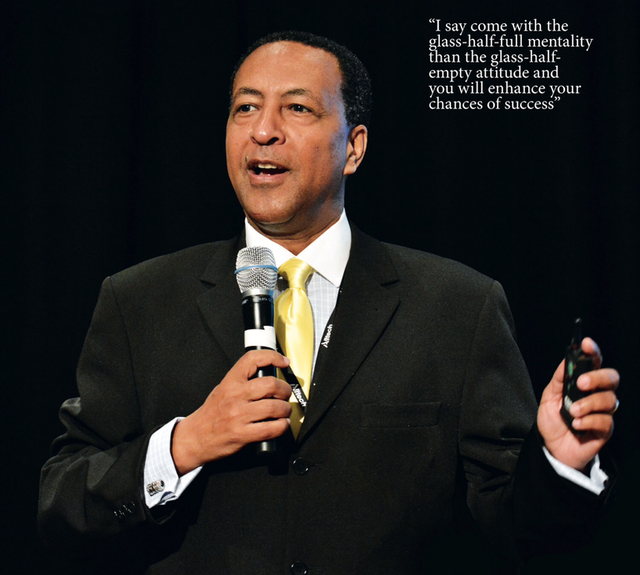
Cover Image: Dr. Mehret Mandefro (Photo courtesy of GHCG); Mahmoud Ahmed, pictured at Damrosch’s Park, NYC, on Wednesday, August 20, 2008. (Photo by Trent Wolbe/Tadias File).

Video: Dr. Ebba K. Ebba, Founder of Gemini Health Care Group, on 50 in 52 interview (2009)

Death of Ethiopian runner Berhanu a suicide

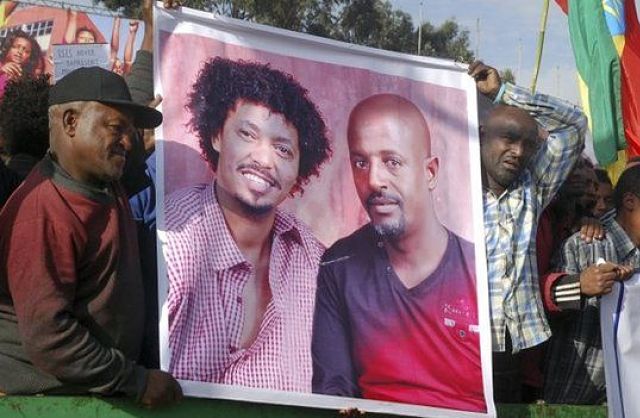
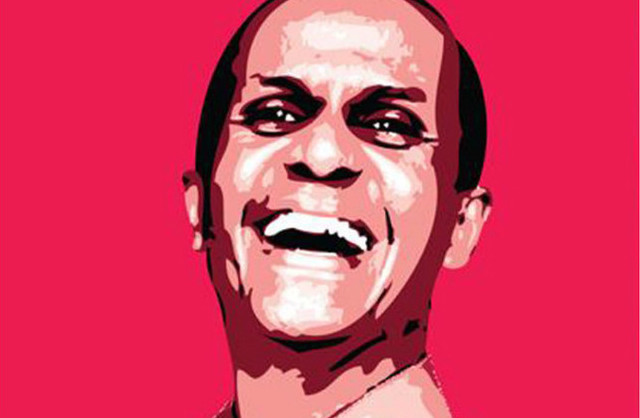
Above: Ethiopian distance runner Dejene Berhanu, 29, was
reported dead last Sunday by his management firm. (RRW)

Race Results Weekly | Universal Sports
Posted: Sep 2, 1:49p ET

Ethiopian distance runner Dejene Berhanu, who was reported dead at the age of 29 last Sunday by his management firm, took his own life.

Two independent sources contacted by Race Results Weekly who had knowledge of the situation, one in the United States and one in Ethiopia, confirmed the news. Neither source wished to be identified given the sensitivity of the situation.

“It is true that Dejene Berhanu died on Sunday from suicide and was buried on Monday,” said the Ethiopian source. “The cause of death is suicide. These are the facts I know at the moment.”

Berhanu first became known in 2000 when he took the silver medal at 10,000m at the African Championships in Algiers. He would eventually improve to make the 2004 Ethiopian Olympic team and finish fifth at the 5000m. He also won the Great North Run Half-Marathon later that year. He had lifetime bests of 12:54.15 for 5000m, 27:12.22 for 10,000m, 59:37 for the half-marathon and 2:08:46 for the marathon. Read more.

Ethiopia Devalues Its Currency by 17 Percent

Above: Ethiopia’s Central Bank announced Wednesday that
the birr has been devalued from roughly 13 birr to the dollar
to nearly 16 ½ birr, a one-day drop of about 17 percent. AE

Voice of America
Peter Heinlein | Addis Ababa

Ethiopia has sharply devalued its currency – the birr – in a bid to boost economic growth. The move was welcomed by economists, though it may have the side effect of fueling inflation.

Ethiopia’s Central Bank announced Wednesday that the birr has been devalued from roughly 13 ½ birr to the dollar to nearly 16 ½ birr, a one-day drop of about 17 percent. The rate was posted on the bank’s website. Officials were not immediately available to comment.

Action Gets ‘Thumbs Up’ – With Some Reservations

The International Monetary Fund representative in Addis Ababa, Sukhwinder Singh Toor, welcomed the move, saying it would help to bolster the competitiveness of Ethiopia’s struggling economy.

Analysts said the devaluation should improve the Horn of Africa nation’s trade deficit. Figures for fiscal year 2010 show a $7 billion deficit, based on $8.7 billion in imports and $1.7 billion dollars in exports. The trade deficit comprises about 30 percent of Ethiopia’s Gross Domestic Product of about $23 billion a year.

But Tewodros Mekonnen, a researcher in the Macroeconomic division of the Ethiopian Economics Association, said the devaluation may not have the desired effect immediately because imports are mostly essential goods, such a food and fuel, while exports are agricultural items.

“In order to reduce your trade deficit, your import and export needs to respond to the exchange rate devaluation, but at the moment imports are too essential to reduce it, so imports may not respond as much,” said Mekonnen. “Also, exports may not respond as much because you cannot increase your agricultural exports just because you have the advantage of the exchange rate devaluation.”

Read more and listen to the report at VOA.com.

Senator Feingold Introduces Tougher Human Rights Legislation on Ethiopia

Above: Senator Russ Feingold introduced law giving guidance
to new U.S. foreign policy towards Ethiopia on human rights.

Tadias Magazine
By Tadias Staff

Published: Sunday, August 29, 2010

WASHINGTON (Tadias) – Senator Russ Feingold (D-Wis.), a member of the United States Senate Committee on Foreign Relations, has introduced a bill entitled “Support for Democracy and Human Rights in Ethiopia Act of 2010.”

The legislation, co-sponsored by Senator Patrick Leahy (D-Vt.), asserts new U.S. foreign policy towards Ethiopia focused on improving humans rights and empowering democratic institutions. The proposed law in the 111th Congress follows Ethiopia’s 2010 disputed national elections.

Below is the text of the bill. You can track its progress at Govtrack.us.

S. 3757:
To reaffirm United States objectives in Ethiopia and encourage critical democratic and humanitarian principles and practices, and for other purposes. Be it enacted by the Senate and House of Representatives of the United States of America in Congress assembled,

SECTION 1. SHORT TITLE.

This Act may be cited as the ‘Support for Democracy and Human Rights in Ethiopia Act of 2010′.

SEC. 2. FINDINGS.

Congress makes the following findings:

(1) Despite progress and an estimated annual growth rate of nearly 10 percent, Ethiopia remains one of the poorest and most hunger-prone countries in the world, with more than half of the population of 78,000,000 living on less than $1 per day.

(2) Since the collapse of the Derg and overthrow of the Mengistu regime in 1991, the Ethiopian Peoples’ Revolutionary Democratic Front-led government has overseen the introduction of a multiparty system and the adoption of a new constitution that guarantees economic, social, and cultural rights and states that `human and democratic rights of peoples and citizens shall be protected.’

(3) Ethiopia and Eritrea fought a bloody border war between 1998 and 2000, and, despite the Algiers Accord ending the conflict and the agreement to abide by the final and binding Ethiopia-Eritrea Border Commission (EEBC) arbitration, the Government of Ethiopia has refused to comply with the final physical demarcation of the border and the Government of Eritrea has expelled the United Nations peacekeeping force, causing regional instability and keeping alive the possibility of a renewed border war.

(4) According to the March 2010 report by the United Nations Monitoring Group on Somalia, `Since the cessation of hostilities between the [Ethiopia and Eritrea] in 2000, Asmara has sought to counter Ethiopian influence in the region and supported armed groups within Ethiopia who oppose the current government. Since 2006, and possibly earlier, Eritrea has supported opposition to the Transitional Federal Government, which it perceives as a proxy for the Government of Ethiopia.’

(5) Sporadic fighting has continued between Ethiopian National Defense Forces (ENDF) and armed opposition Ogaden National Liberation Front (ONLF) in the Somali Region of Ethiopia. Stringent restrictions continue to be placed on media and aid workers, making it difficult for independent observers and aid workers to monitor or respond to the humanitarian and human rights situation, including the behavior of the Ethiopian National Defense Forces, allied militia forces, and the Ogaden National Liberation Front.

(6) Credible sources indicate there are ongoing and serious human rights abuses against civilians in the Somali Region, including arbitrary arrests and detentions by military, police and paramilitary forces; allegations of torture in military and police custody, including sexual violence against women and girls; and diversion of food aid intended for civilian communities.

(7) In the run up to the 2010 elections, the Ethiopian Parliament passed a number of new laws, including the Charities and Societies Proclamation and the Anti-Terrorism Proclamation, which severely restrict freedom of expression, freedom of association, peaceful assembly, and the right to a fair trial, while broadening the definition of terrorism.

(8) The Department of State’s 2009 Country Reports on Human Rights Practices states that `although the constitution and law prohibit the use of torture and mistreatment . . . [o]pposition political party leaders reported frequent and systematic abuse and intimidation of their supporters by police and regional militias’ and that `opposition UDJ party president Birtukan Mideksa, whose pardon was revoked and life sentence reinstate in December 2008, remain in prison throughout the year. She was held in solitary confinement . . . despite a court ruling that indicate it was a violation of her constitutional rights’.

(9) In its 2010 Freedom in the World report, Freedom House noted that, in the run up to elections, Ethiopia saw a `narrowing of political activity . . .’ and that `the government cracked down on operations of nongovernmental organizations and . . . a series of arrests of opposition figures’.

(10) The European Union Election Observer Mission noted in its preliminary statement on the May 23, 2010 elections, `The National Electoral Board of Ethiopia administered the electoral process in an efficient and competent manner, but failed to dispel opposition parties’ lack of trust in its independence. While several positive improvements have been introduced, the electoral process fell short of certain international commitments, notably regarding the transparency of the process and the lack of a level playing field for all contesting parties.’

(11) In testimony before the Subcommittee on Africa and Global Health of the Committee on Foreign Affairs of the House of Representatives, Assistant Secretary of State for African Affairs Johnnie Carson stated that `[w]hile the [Ethiopian] elections were calm and peaceful and largely without any kind of violence we note with some degree of remorse that the elections there were not up to international standards,’ and that `[i]t is important that Ethiopia move forward in strengthening its democratic institutions and when elections are held that it level the playing field to give everyone a free opportunity to participate without fear or favor’.

(12) On May 25th, 2010, the National Security Council’s spokesman Mike Hammer, released a statement which noted with concern that `The limitation of independent observation and the harassment of independent media representatives [in Ethiopia] are deeply troubling . …[and that an] environment conducive to free and fair elections was not in place even before Election Day.’ The statement also noted that `[i]n recent years, the Ethiopian government has taken steps to restrict political space for the opposition through intimidation and harassment, tighten its control over civil society, and curtail the activities of independent media. We are concerned that these actions have restricted freedom of expression and association and are inconsistent with the Ethiopian government’s human rights obligations.’

SEC. 3. STATEMENT OF POLICY.

It is the policy of the United States–

(1) to support and encourage efforts by the people and Government of Ethiopia–

(A) to achieve a participatory multiparty democracy, an active and unhindered civil society, rule of law and accountability, judicial capacity and independence, freedom of the press, respect for human rights, and economic development; and

(B) to develop a comprehensive strategy to combat extremism and terrorism in a manner consistent with international law;

(2) to promote peace and stability, equal access to humanitarian assistance regardless of gender, ethnicity, religion, or political views, and good governance, transparency, and accountability;

(3) to seek the unconditional release of all political prisoners and prisoners of conscience in Ethiopia, and the repeal of laws that enable politically motivated arrests without due process;

(4) to prohibit funding to any unit of the Ethiopian security forces if the Secretary of State has credible information that such unit has committed a gross violation of human rights, unless the Secretary certifies to the appropriate congressional committees that the Government of Ethiopia is taking effective measures to bring the responsible members of the security forces unit to justice; and

(5) to seek a resolution of the ongoing dispute between the Government of Ethiopia and the Government of Eritrea consistent with the Ethiopia-Eritrea Border Commission arbitration decisions on border demarcation, to press the Government of Eritrea to cease all support for armed opposition groups in Ethiopia and the region, and to urge both Governments to contribute constructively to stability throughout the Horn of Africa, especially in Somalia.

SEC. 4. SENSE OF CONGRESS.

It is the sense of Congress that the United States Government should–

(1) build on successful diplomatic efforts that contributed to the October 2007 release of political prisoners in Addis Ababa, and press the Ethiopian government to release Birtukan Mideksa, as well as other political prisoners;

(2) urge the Government of Ethiopia to repeal or at a minimum amend the Civil Society Proclamation, the Anti-Terrorism Proclamation, and the Mass Media and Freedom of Information Proclamation in order to genuinely protect the constitutional rights and freedoms of all Ethiopian citizens;

(3) press the Government of Ethiopia to allow human rights and humanitarian groups, as well as the media, to have unfettered access to areas of concern throughout the country;

(4) encourage and assist the United Nations and other independent organizations and the media to investigate credible reports of gross violations of human rights or international humanitarian law in the Somali region of Ethiopia, to publish any information of serious abuse, and send consistent messages to the Government of Ethiopia that the continuation of such violations or impunity in this region, or Ethiopia more generally, has consequences for relations between the United States and Ethiopia; and

(5) encourage the Governments of both Ethiopia and Eritrea to immediately take steps to lessen tensions, physically demarcate the border in accord with the Ethiopia-Eritrea Border Commission decision, and promote normalization of relations between the two countries.

SEC. 5. RESTRICTIONS ON ASSISTANCE.

(a) Conditions-

(1) PROHIBITION OF FUNDS- Notwithstanding any other provision of law, assistance may not be provided to the Government of Ethiopia unless the Secretary of State certifies annually that the Government of Ethiopia has taken demonstrable steps–

(A) to ensure the autonomy and fundamental freedoms of civil society organizations to pursue work on civic education, democratization, good governance, accountability, human rights, and conflict resolution, without excessive government intervention or intimidation;

(B) to respect the rights of and permit non-violent political parties to operate free from intimidation and harassment, including releasing opposition political leaders currently imprisoned;

(C) to strengthen the independence of its judiciary, including developing the capacity of the judiciary at the national, regional, and local levels;

(D) to allow Voice of America and other independent media to operate and broadcast without interference in Ethiopia;

(E) to promote respect for human rights and accountability within its security forces, including undertaking credible investigations into any allegations of abuse and ensuring appropriate punishment; and

(F) to ensure that humanitarian and development entities, including those of the United Nations, have unfettered access to all regions of the country without prejudice to the political views of recipients.

(2) WAIVER- The prohibition included in paragraph (1) shall not apply if the Secretary of State certifies in writing to Congress that waiving such a prohibition is in the national security interest of the United States.

(b) Exceptions- The prohibitions in paragraph (1) shall not apply to–
(1) health and HIV/AIDS assistance;
(2) humanitarian assistance; or
(3) emergency food aid.

(c) Report- Not later than 120 days after exercising a waiver pursuant to subsection (a)(2), and every 90 days thereafter, the Secretary of State shall submit a report to the appropriate congressional committees assessing progress made by the Government of Ethiopia in the areas set forth in subparagraphs (A) through (F) of subsection (a)(2).

SEC. 6. DEFINITIONS.

In this Act the term `appropriate congressional committees’ means–

(1) the Committee on Foreign Relations and the Committee on Appropriations of the Senate; and

2) the Committee on Foreign Affairs and the Committee on Appropriations of the House of Representatives.

Ethiopia’s capital city: Make it prettier and cheaper

Above: Architects want to make Addis that hosts the African
Union nicer – the city has a high density of slum dwellers- UF

The Economist

Aug 26th 2010 | ADDIS ABABA

AMHARIC has no precise word for architecture, but it needs one. Ethiopia’s capital, founded by Emperor Menelik II in 1886, now has 4.6m people but that figure may well double by 2020. Dirk Hebel of Addis Ababa’s revamped architecture school says that “the first thing we do is to sit down with the students for a day and explain what [it] is”.

According to the UN, Addis has one of the higher densities of slum dwellers in the world. But their geographical pattern is unusual. Most African cities separate fairly neatly into poor and rich areas “like a sunny-side-up egg”, with slums spreading out from the rim, says Mr Hebel. But Addis is “more of a scrambled egg”. A lack of crime and a tradition whereby the rich seem to tolerate the poor living among them mean that Addis’s slums often lie in the seams between office buildings and flats in the more affluent parts of the city.

Some cash for the overhaul of the architecture school has come from a technical institute in Zurich, known by its initials ETH. Mr Hebel and Marc Angélil, head of ETH’s architecture school, have co-written a book that explores the city’s many architectural styles. Ministries built in Ethiopia’s Marxist period (1974-91) were kit models from the Soviet Union. Fascist-style buildings built during the Italian occupation (1935-41) have often proved more suitable. Messrs Hebel and Angélil think African architects could learn from the way the Italians allowed streets to radiate out from grand central buildings.

What the architects call this “mixity” of styles may offer a chance to tackle the scourges of traffic gridlock and pollution. The city still has some open spaces that could be artfully filled in if public transport and the water supply were improved, along with the planting of indigenous trees and grasses. Read more.

Russian Explorer Claims Unusual Access to the Ark of the Covenant in Ethiopia

Above: Russian traveler Fyodor Konyukhov has become the
latest person to make a claim about viewing the relic (VOR).

Tadias Magazine
By Tadias Staff

Published: Thursday, August 26, 2010

New York (Tadias) – The Voice of Russia is reporting that celebrity explorer and ordained Orthodox deacon Fyodor Konyukhov has been given the unusual access to view the Ark of the Covenant in Ethiopia.

According to the radio station’s website, the world-famous traveler went to Ethiopia to work on an officially sanctioned project of producing a map with new tourist routes to Ethiopia’s historical sites. The Voice of Russia announced that he is now “the first European to see the Ark of the Covenant where the stone tablets with the Ten Commandments communicated to Moses by God on Mount Sinai are believed to have been put.” Corroboration from the Ethiopian side has not been cited.

“I did not expect it, but the Ethiopians showed me the Arc of the Covenant,” Fyodor Konyukhov told VOR. “It was four o’clock, and I was with priests at the service. I was standing near the keeper of the relic and I looked into his eyes. I have never seen such a person. Light was emitting from his eyes. He could not talk to me, because priests do not talk during Lent. The Arc of the Covenant was taken out and it was shown to me. An Ethiopian operator was at the scene and filmed the event,” he said.

According to Professor Ayele Bekerie of Cornell University, who penned a recent article on the subject for Tadias Magazine, the biblical relic, which is a central tenet of the Ethiopian Orthodox Christian faith, has been a source of puzzlement and speculation by generations of foreign travelers and researchers alike. “The Ark of the Covenant may have been a source of mystery and curiosity, but for Ethiopian Christians, it is the rock of their faith,” wrote Bekerie. “There have been countless conjectures regarding the Ark’s fate and final resting place, but the Ethiopian Christians locate the Ark or what they call Tabot at the center of their faith…while the rest of the world sees it, at best, as a source of inspiration to write mystery novels, construct countless theories or make adventurous films, the Ethiopians believe that the Ark of the Covenant was brought to Ethiopia from Jerusalem with the return of Menelik I after his famous visit with his father, King Solomon.’”

Meanwhile, The Voice of Russia says the explorer has also been granted permission to build a Russian Orthodox church in Addis Ababa, which will be named St. George chapel. “We met with the builders and Ethiopian workers. Our embassy helped us. I hope to install a cross at the site before I leave for the expedition in February,” Konyukhov said.

You may read the original story at The Voice of Russia.

Cover Image: Fyodor Konyukhov (RIA Novosti)

Related article from Tadias archives:
The Not-So-Lost Ark of the Covenant

Related video:
Ethiopia – Keepers of the Lost Ark (David Adams Films)

Digging for the Truth: History Channel documentary television series about the Ark

USDFA Sends $300000 Worth of Med-Equipment to Ethiopia

Above: USDFA has sent large supplies of medical equipment
to help furnish a new hospital under construction in Ethiopia.

Tadias Magazine
By Tadias Staff

Published: Sunday, August 22, 2010

New York (Tadias) – US Doctors for Africa, a California based NGO, announced that it has shipped nearly $300,000 worth of medical equipment to Ethiopia.

The cargo, which also contains medical supplies, is intended to furnish a new hospital under construction in the Oromo region of Ethiopia.

According to USDFA’s Founder and CEO Ted Alemayhu, the material is being delivered through the local health authorities. “Members of the Oromo regional government officials have expressed their advance gratitude to USDFA for the vital support in providing the supplies to the hospital,” Mr. Alemayhu told Tadias. “The facility currently being built would provide some vital healthcare services to over 350,000 people.”

Mr. Alemayhu said USDFA mobilizes American healthcare professionals to engage in service in Africa, and also plans to send volunteers to the area on a regular basis. “Besides sending the medical equipments and supplies, we plan to send medical personnel to the region for short term missions year round,” he said.

You can learn more about U.S. Doctors for Africa at USDFA.org.

Washington Post Highlights Henok Tesfaye

Above: Henok Tesfaye’s company, U Street Parking, has been
awarded parking contracts worth millions to oversee Dulles &
National airports. – -(Photo Yared and Henok by Dayna Smith)

Tadias Magazine
By Tadias Staff

Published: Monday, August 16, 2010

New York (Tadias) – The Washington Post features Henok Tesfaye, an Ethiopian American parking mogul who started in valet-parking to become one of the biggest players in Washington, D.C.’s parking industry. Tesfaye’s company, U Street Parking, has been “awarded a lucrative contract to oversee 37,000 public parking spaces at Dulles International and Reagan National airports, including four garages, three surface lots and a valet service.”

Tesfaye, whom Tadias highlighted last year when he hosted a fundraiser for the reelection bid of Mayor Adrian M. Fenty at Etete, said winning the business was an emotional experience. “When I got the call that we had got the contract, I cried,” Henok told the paper, from his office in a rowhouse on Rhode Island Avenue NE. “We were a long shot. We’ve always been a long shot.”

But those who know him in the community consider him to be a trailblazer.

“He’s the leading young entrepreneur in our community. . . . I know him from when he was a parking attendant, and it’s great to see these types of businesses grow,” said Dereje Desta, the publisher of Zethiopia, an Ethiopian newspaper in the District.

Read the story at Washingtonpost.com:
Young parking lot czar is the face of Ethiopian success in the D.C. area.

Related from Tadias Archives
Photos from Mayor Adrian M. Fenty’s Fundraiser at Etete

Made in Ethiopia: Sole Rebels Wins Eco-Bold Green Award

Above: Sole Rebels, Ethiopia’s first fair trade fashion company,
has won this year’s Eco-Bold Green Award. (Exclusive photo)

Tadias Magazine
By Tadias Staff

Published: Sunday, August 15, 2010

New York (Tadias) – EcoBold, the Silicon Valley-based provider of online video reviews of green and eco-friendly products, has named Sole Rebels, Ethiopia’s environmentally-sensible footwear brand, as winner of its first Annual Green Awards under “Best Shoes” category.

According to the company: “The award recipients represent an array of green companies…judged on a series of ‘green qualifications,’ which scrutinized their product and examined company-wide practices such as promoting green initiatives to employees, packaging footprint, and social causes impacting the environment.”

Bethlehem Tilahun Alemu, Co-founder and Managing Director of Sole Rebels, said her team welcomes the news. “We are really honored and excited. When I told the team here, they were sort of in shock,” she told Tadias via email. “Then, big smiles, lots of them!”

According to EcoBold’s Chief Executive, contestants were primarily considered on the basis of the greenness of their products as well as eco-sensible business practices. “The contributions made by these green companies make a tremendous difference in how people produce, consume, and think about the environment,” Steffany Boldrini, EcoBold’s CEO and Founder, said in a statement. “Their level of commitment and dedication to making a difference with sustainable and eco-friendly products are reflections of company-wide green initiatives towards a greener future.”

Bethlehem said her company accepts the accolade as a recognition of the brand’s message that organic living is part of the nation’s way of life. “It affirms our belief that we are green by heritage,” she said. “We utilize Ethiopia’s immense, diverse, sustainable and eco-friendly materials and cultural arts to craft amazing footwear for the global market.”

EcoBold is a California based e-commerce company that “creates awareness of sustainable and green products by providing online video reviews of various green and eco-friendly household products.”

Images: Exclusive photos from Sole Rebel’s spring 2011 collection provided to Tadias by the company.


Photo courtesy of Sole Rebels (Spring 2011 collection)

Photo courtesy of Sole Rebels (Spring 2011 collection)

-
Related story:
CNN’s African Voices features Bethlehem Tilahun Alemu

Watch: Turning old tires into shoes (7:10)

Video: Young SoleRebel (8:07)

Video: Creating window to world market (7:24)

Ethiopian Soccer Tournament: Delay to announce host city has Toronto organizers fed up

Above: The most recent tournament was held in San Jose, CA
Toronto and Atlanta are the front runners for 2011. (File photo)

Tadias Magazine
By Yeamrot Taddese

Published: Friday, August 13, 2010

Toronto, Canada (Tadias) – The Ethiopian Soccer Federation in North America (ESFNA) was supposed to announce the next soccer tournament host city on July 4 but bidding cities are still waiting for a decision.

Tournament organizers in Toronto said if the delay continues, their city will lose a rate offer from the Royal York Hotel, one of the hotels where discounted reservation has been made to accommodate visitors. “A decision will need to be made very soon to be able to hold the space for [the tournament],” wrote Shelley Crawford, the Account Director of Sports from Tourism Toronto to the organizing committee. “Royal York’s offer will expire late August.”

Samuel Getachew, the communications director of Toronto’s Ethiopian soccer team, Ethio Star, has also been working to complete ESFNA’s criteria of a host city. “It has been six weeks and I am now questioning my confidence in working with the federation,” he said. He added that he personally believes ESFNA is having a hard time choosing between Toronto and its competition Atlanta. “But leadership is about making decisions.”

Getachew, who is running for city councillor in Toronto, said he and his team are still making sure they provide everything ESFNA asks for. If the games don’t come to Ontario’s capital next year, Getachew said he will resign his post as a member of the organizing committee of tournament.

The organizing team and other Torontonian Ethiopians told Tadias in June that it is about time their city hosted the soccer games. ESFNA must include Canada to live up to its name as a North American sports federation, they had said.

This week, the Ethiopian community in Ontario’s capital succeeded in having September officially recognized as Ethiopian Heritage Month by the City of Toronto.

ESFNA spokesperson Fassil Abebe said the delay is a result of some “unfinished business.” He said the federation is still seeking supporting documents from Toronto and Atlanta. He added that decision will be made by August 15. The organizing committee in Toronto has not been made aware of this date.

The last time Toronto hosted the games was in 2000 and Atlanta in 2005.

Support of the community to the sports, availability of a large stadium, closing venue and a member team are some of the criteria ESFNA is looking at. Abebe said he will not say what each city currently lacks.

Abebe also said the criticism that ESFNA excludes Canada despite its name does not hold. “There are cities [in the United States] that have never hosted the games,” he said. “Yes, it has been 10 years but Toronto has at least hosted the tournament twice.” He added that Calgary was one of the four non-member teams which competed to become a member in San Jose this year.

Endale Tufer, Atlanta’s tournament organizer said it is not the first time a delay is happening but he said he could not comment about the implications of the hold-up on Atlanta’s preparations.


Cover Image: At the 2010 San Jose Ethiopian Soccer Tournament by Kal Kassa.

About the Author:
Yeamrot Taddese is a journalism student at the University of Toronto, Canada. She is also a contributing reporter for Tadias Magazine.

Related from Tadias:
Photo Journal: San Jose Ethiopian Soccer Tournament 2010

Toronto Says It Has What It Takes to Host the Tournament

Photos from Chicago: Ethiopian Soccer Tournament 2009 (Tadias)

Dispute Leaves Miss Ethiopia Without Prize

Above: Contestants at the 2010 Miss Ethiopia Pageant in July
were promised that the winner will be awarded a brand new car.

Tadias Magazine
By Tadias Staff

Published: Tuesday, August 10, 2010

New York (Tadias) – The winner of the 2010 Miss Ethiopia pageant was to receive a brand new ride, the Chinese made Lifan 320, except the car dealership Yangfan Motors in Addis Ababa, who is the announced sponsor of the event, says it never made a written agreement to deliver the prize.

According to Addis Fortune, “Ethiopian Village Adventure Playground (EVAP) is to wait until Thursday, August 12, 2010, to see whether Yangfan will award a Lifan 320 to the newest Miss Ethiopia. Failing to deliver the prize may result in being taken to court while Yangfan, in turn, threatened to sue EVAP for defamation.”


Melkam Michael, a sophomore at Addis Abeba University Law School, was named winner of the prize last month at a ceremony held at the Hilton Addis, featuring celebrity judges including Mulatu Astatke and Meseret Mebrate.

The pageant organizers, who had publicized the award in advance, accused Yangfan Motors of canceling its commitment at the last minute and stealing their copy of the written agreement. According to Murad Mohammed, director of EVAP, Yangfan Motors took his copy of the written document without his knowledge, and he has been unable to regain possession of it. “It is not the 18th or 19th century where people only agree on something orally,” he told Fortune.

Yangfan Motors’ local Marketing Manager William Wong rejected the claims, denying the existence of such a binding contract. “There was no agreement to cancel,” he said. “We did not agree to give them a car and because EVAP did not carry out its responsibilities, we are not going to give them any discount.”

The report, however, points to another document that indicates the existence of a prior understanding. “Yangfan Motors had sent EVAP a letter on April 23, 2010, complaining that they had failed to promote the company on public media and billboards. The company demanded that the problems be corrected within one week or it would be ‘forced to cancel our entitled agreement of cooperation,’ according to the letter. ”

Meanwhile, Melkam says although she is happy to be named Miss Ethiopia 2010, she would not mind to sit behind the wheel. “I would be happy if I get the promised car,” she said.


Cover image: Group photo of Miss Ethiopia 2010 contestants (WorldShowBiz.info)

Ethiopian Artist Tibebe Terffa Paints Kentucky

Above: An exhibition featuring paintings inspired by Ethiopian
artist Tibebe Terffa’s recent visit to Kentuky entitled “Corralling
Colors” opened on Monday in Stanford, where he spent weeks.

Tadias Magazine
Events News

Published: Sunday, August 8, 2010

New York (Tadias) – Renown Ethiopian artist Tibebe Terffa has spent the last two months in Kentucky, where his paintings inspired by local traditions and the states’s famous horse culture, will go on display this week at the Lincoln County Public Library in Stanford.

“It’s mission accomplished, I believe,” Tibebe told the local AM news. “I never thought I could paint all these paintings. It has been very inspiring. I am having a very pleasant time,” he said inside the little home on Mill Street that has been his home and studio. “I didn’t have much stressful times. There’s not much stress reflected in these paintings.”

His ten-week stay in Stanford was sponsored by the First Southern National Bank in partnership with the city’s downtown arts program. As AM News notes, the bank’s President “Jess Correll and wife Angela met Terffa while visiting Ethiopia in February. They visited his studio in the capital city of Addis Ababa, liked his work and bought some of his paintings.”

“Just a coincidence,” Tibebe said of the Corrells’ visit and timely offer.

Per the artist’s website, Tibebe, 62, “was born in the walled city of Harar, Ethiopia in 1948. He studied at the University of Addis Ababa School of Fine Art and Design from where he graduated in painting in 1973. During the school years (1970-1973), Tibebe and his friends formed the Sixteen Young Artist’ Association that aimed at staging exhibitions around the country. Tibebe worked as an art instructor at the Medhane Alem Comprehensive High School in Harar from 1973 until 1980. In 1981 he moved to Addis Ababa, and worked as an Illustrator for Kuraz Publishing House until 1983. Since 1984 he has been working as a studio artist from his residence in Addis Ababa. He has had numerous solo exhibition in Ethiopia, Germany (Berlin), Canada (Winnipeg ,Toronto), USA (Washington), and Spain (Madrid).”

Regarding his recent works, the painter said he initially had to return to recalling scenes from Ethiopia in order to place his new and unfamiliar surroundings into perspective and to get his ‘creative juices flowing.’ “Like a tree, I have roots, a culture, a place where I grew up,” he explained. “When you have roots you can return to, you are not lost. These first paintings were a spring to get to the unknown, to start the engine, to wake up the engine.”

“What goes on inside an artist’s head and then comes out on canvas has been an interesting process to watch,” said Jess Correll, president of First Southern National Bank.

If you go
Ethiopian artist Tibebe Terffa’s “Corralling Colors” exhibit of paintings completed in Stanford will open Monday at Lincoln County Public Library, 310 N. Third St., Stanford. An artist’s reception will be from 6:30-8:30 p.m. More at amnews.com.

Learn more about Tibebe Terffa at: tibebeterffa.com

Cover Image: The artist courtesy of tibebeterffa.com and the picturesque Lincoln County Courthouse located in Stanford, Kentucky.

Seattle: Ethiopians seek help to open a community center

Above: Mulu Retta, boardmember of the Ethiopian Community
Mutual Association. The organization is raising funds to build a
community center in South Seattle. (Seattle Post Intelligencer)

Seattle Post Intelligencer
By Scott Gutierrez

Despite its wet and mild climate, the greater Seattle area is home to many East African immigrants, with estimates ranging from 25,000 to 40,000.

“It’s probably more than that,” said Mulu Retta, a member of the Ethiopian Community Mutual Association.

That’s one reason why Retta and her association are trying to start a new Ethiopian community center in South Seattle. They envision a central gathering place that provides youth activities and cultural events, services for seniors and a spot for celebrating holidays, weddings and graduations.

They’ve offered to buy the Faith Temple Community Church building at 8323 Rainier Ave. S. in Rainier Beach for $1.6 million. The church’s congregation moved to a new location and put the building up for sale.

But they’re only halfway to raising $200,000 they need for a down payment. Despite the slow economy, they raised $100,000 in a few months. They’re hoping others in their community will rise to help before an Aug. 31 deadline, said Retta, chairwoman of the association’s building fund committee. Read more.

President Obama Meets With Young African Leaders At The White House

Above: President Obama held a forum at the White House on
Tuesday with 115 young leaders from Africa designed to mark
the fiftieth anniversary of African independence (Getty Images)

Tadias Magazine
Events News

Published: Tuesday, August 3, 2010

New York (Tadias) – President Barack Obama hosted a large contingent of young African leaders from the public and private sectors at the White House on Tuesday.

115 young leaders representing more than 40 countries – including Ethiopia – gathered for the East Room event, where the President led a town hall meeting urging the attendees to focus on economic progress, fighting corruption, disease and extremism on the continent.

“We are rooting for your successes,” Obama said. “And we want to work with you to achieve that success. But ultimately, success is going to be in your hands.”

The young leaders were joined by a number of U.S. administration officials, including Attorney General Eric Holder, Commerce Secretary Gary Locke, U.S. Trade Rep. Ron Kirk and USAID Administrator Rajiv Shah and others.

WATCH

According to the White House, the event, which was also designed to mark the fiftieth anniversary of African independence, “presents the U.S. government and American friends of Africa with an opportunity to deepen and broaden our understanding of the trajectories of African societies, and to reflect on how the next generation are building their communities’ and their nations’ futures – just as their predecessors did in the era of independence from colonial rule.”

In addition to the town hall meeting, the three-day forum features small-group discussions on topics such as transparency and accountability, job creation and entrepreneurship, rights advocacy, and the use of technology to empower individuals and communities.

The administration hopes the event will also serve as a networking opportunity between the African leaders and their American counterparts. “The U.S. government’s role in this gathering is as a convener, encouraging networks between young American and African leaders, and pursuing lasting partnerships on behalf of our common security and prosperity,” the White House said. “This dialogue and follow-up events in Africa will help the U.S. government better assess how to support Africa’s own aspirations going forward.”

Per the U.S. Embassy in Addis Ababa, four young people represented Ethiopia at the forum, including Mahlet Eyassu Melkie, 29, a climate change activist; Meron Getnet Hailegiorgis, 27, an author; Salsawit Tsega Ketema, 30, Founder of Sel Art Gallery and Yohannes Mezgebe Abay, 35, Vice President of the Pan African Youth Union.

Cover Image: President Obama speaks during a town hall meeting with Young African Leaders in the East Room at the White House. (Jewel Samad/AFP/Getty Images)

White House Party for Africa Leaves Out Leaders (The New York Times)

Related from Tadias Magazine:
On the South Lawn of the White House (By Ayele Bekerie)
Video: Obama’s Message To Africa during his 2009 visit to Ghana

Ethiopian Youth Lobby Senators to Pass Law Protecting Girls

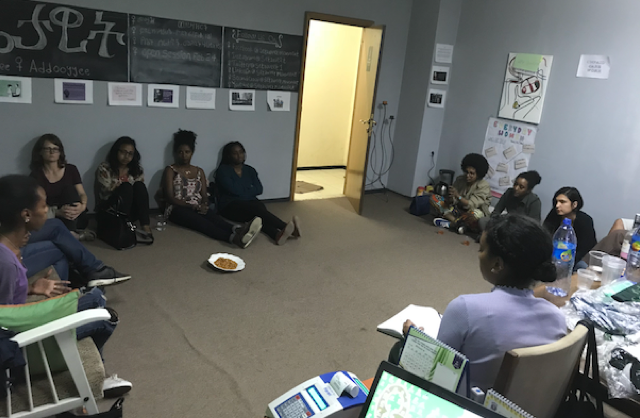
Above: The kids on the hallways of Rayburn US Congress Bldg
where they handed 11,000 letters to Senators lobbying for the
support of H.R. 2103. – (Photo by Saba Fassil – July 15, 2010)
Tadias Magazine
OP-ED
By Saba Fassil

Published: Thursday, July 29, 2010

WASHINGTON (Tadias) — Two weeks ago, about 20 young people from the Ethiopian Community Center in D.C., along with their peers from other communities, descended on the U.S. Senate, where they delivered over 11,000 letters urging lawmakers to pass “The International Protecting Girls by Preventing Child Marriage Act.”

The bill, if passed, will authorize the President to provide assistance, including through multilateral, non-governmental, and faith-based organizations, to prevent child marriage in developing countries and to promote the educational, health, economic, social, and legal empowerment of girls and women.

According to USAID, the marriage of girls under 18 is a common practice in many developing countries, including Ethiopia, and in some regions it is a deeply-rooted tradition. USAID research shows that “the practice can produce large families, poverty, medical complications due to early childbearing, increased vulnerability to HIV/AIDS, high rates of divorce, and interruption of education.” There are already an estimated 60 million girls worldwide who are child brides; without serious action to end this harmful tradition 100 million more girls are expected to be forced into marriage in the next decade.

The lobbying effort, which was coordinated by Plan USA – part of Plan International, a world-wide non-profit organization with country offices in 48 developing countries including Ethiopia – used letters written by volunteers from each of the 50 states asking the Senators for their support to pass the law so that no girl ever has to be forced into marriage, at ages as young as seven!

Helina, a student at Cardozo Senior High School in Washington, D.C., is one of the leaders of the youth delegation. She was born in Ethiopia where half of all girls are married by age 14 in the northern Amhara region. “Child marriage is terrible,” says Helina. “Kids should be able to stay in school and get an education, and not be forced into marriage. We need to do something about it. We have to make sure people are aware of this situation.”

Sixteen-year-old Shayna, a D.C. student at School Without Walls says, “It is important for girls my age or younger to go through their childhood experience in a positive way so they can grow and become strong young women, and know what it is they want for themselves and get proper education, develop friendships and connections with others. Ultimately having strong and beautiful young women in this world will make this world a better place.”

Mamadou,12, is a boy trying to stand up for girls, something you don’t usually see on the school playground. But he wants to help stop the practice of child marriage, a tradition that stands to affect 100 million more girls in the coming decade. “It just basically messes up your whole life. Just imagine yourself as a young child wanting to be a doctor. But then you get married at a young age, do you really think that those dreams are still alive?”

Nardos, a young Ethiopian-American girl, was brimming with excitement to be walking into Senate offices, gladly attending a Congressional hearing about child marriage and speaking to Senate aides.


The kids gather to lobby congress on July 15, 2010. Courtesy Photo.

Hopefully this youth-led effort will help push the Senate, in its final marathon before adjourning for the year, to pass this important act, and help millions and millions of girls worldwide have the chance to be just girls, not wives.

These young global citizens are participants of “Because I am a Girl” – Plan International’s campaign to fight gender inequality, promote girls’ rights and lift millions of girls out of poverty.

About the Author:
Saba Fassil works on policy and public engagement at Plan USA. She is a graduate of the George Washington University, where she earned a B.S. in Economics.

Married too Young: Related from Brown Condor (BC Radio)
Girls visit Congress and deliver over 11,000 letters
to Senators urging passage of H.R. 2103.

New York Times Highlights Abyssinian Fund

Above: The Rev. Nicholas S. Richards, head of the Abyssinian
Fund, an NGO that is financing the training of farmers working
to produce higher-quality products. Photo: The New York Times

Harlem Helps Raise Coffee in Ethiopia
Tadias Magazine
By Tadias Staff

Published: Tuesday, July 27, 2010

New York (Tadias) – The New York Times highlights one of the latest projects by members of Harlem’s legendary Abyssinian Baptist Church: the Abyssinian Fund, the only nongovernmental organization by an African-American church operating in Ethiopia.

The NGO was officially launched last December at an event held at the elegant Harlem Stage, which was attended by a diverse group of people, including local politicians, business leaders, and diplomats.

According to NYT, the young organization has already hit the ground running. “It will soon be joining forces with a co-op of 700 coffee farmers in the ancient Ethiopian city of Harrar, with a mission to improve the quality of the farmers’ lives by helping them improve the quality of their coffee beans,” the newspaper reports. “The Abyssinian Fund will pay for specialized training and equipment to help the co-op’s farmers produce a higher-quality product so they can be more competitive on the international coffee market. Once their income has increased, part of what they make will then be set aside in a fund to support local development projects, like much-needed roads, schools or clinics.”

According Reverend Dr. Calvin O. Butts, III, the church’s current pastor – who made a brief introductory remark at the fund’s launch VIP reception in December 2009 – the project was born out of the group’s historic trip to Ethiopia three years ago. Reverend Butts, who led over 150 delegates to Ethiopia as part of the church’s bicentennial celebration and in honor of the Ethiopian Millennium, told the crowd that the journey rekindled a long but dormant relationship that was last sealed in 1954 with an exquisite Ethiopian cross, a gift from the late Ethiopian Emperor Haile Selassie to African-Americans as a symbol of love and gratitude for their support and friendship during Mussolini’s invasion of Ethiopia. The cross has since become the official symbol of the church.

“The Abyssinian Fund is inspired by the pilgrimage taken by The Abyssinian Baptist Church to Ethiopia in 2007, “said Rev. Richards in an email after last year’s event. “We saw the biggest enemy Ethiopia faces is poverty, so on our arrival back in the USA, we dedicated our energy and love for Ethiopia to establish an organization dedicated to creating and supporting sustainable development.”

“The mission of the Abyssinian Fund is to reduce poverty in Ethiopia by increasing the capacity of farming cooperatives and by developing programs for the wider community, which will lead to sustainable improvements in health care, education and access to clean water, Rev. Richards said. “I strongly believe in the success of our goal to develop Ethiopia, one community at a time.”

According to the church’s official history, in 1808, after refusing to participate in segregated worship services in lower Manhattan, a group of free African Americans and Ethiopian sea merchants formed their own church on Worth Street, naming it the Abyssinian Baptist Church in honor of Abyssinia, the former name of Ethiopia.

Related from Tadias Magazine:
Harlem’s Legendary Church Launches Abyssinian Fund

Slideshow: See photos from the launch event in harlem:

Related Tadias Magazine stories:
African American & Ethiopian Relations (Tadias)
haile_powel.jpg

The Case of Melaku E. Bayen & John Robinson (Tadias)
melakuimage1.jpg

Addis Voice Relaunches Its Newest Website

Above: Addis Voice announced the official re-launch of its site.
The new cutting-edge website integrates a number of new and
upgraded multimedia features. The Addis Voice site screen shot.

Tadias Magazine
By Tadias Staff

Published: Tuesday, July 27, 2010

New York (Tadias) – Addis Voice has unveiled its newest online design featuring a significant relaunch of its website and an upgraded version of its customizable toolbar.

Developed by Abebe Gelaw – the first Ethiopian-born journalist to be awarded the coveted Stanford University’s Knight Fellowships for international journalists and the 2010 World Economic Forum’s Young Global Leaders honoree – The Conduit powered Toolbar delivers up-to-the-minute breaking Ethiopian stories from news sources across the globe.

“With increasing demand for service upgrade in the face of repeated technical and server problems with Bravenet, we are certain that the new site and Bluehost server will not only address the issues but also help the smooth and seamless running of the website,” the organization said in a press release.

“Addis Voice is also excited to report that its multimedia toolbar has become a powerhouse of information and must-have digital tool that delvers up-to-the-minute news, radio podcasts, video streaming, live webcasts, weather updates and other essential gadget to Ethiopians all over the world.”
—-

Related from Tadias Archives:
Addis Voice Toolbar Delivers Breaking Ethiopian News To Your Desktop

Africa-USA Business Executives Convention to Take Place in Las Vegas

Above: A large contingent of African business executives and
their American counterparts are scheduled to meet in Nevada.

Tadias Magazine
Events News

Published: Monday, July 26, 2010

New York (Tadias) – Over a thousand African business leaders and their American counterparts are expected to convene in Las Vegas in early November for what organizers say will be the biggest convention of its kind in the United States.

Top executives from various industries including Telecom, Energy, Banking, Mining, Agriculture, Airlines, Tourism as well as Ministers of Trade & Investment from across the African continent will gather for the 3-day conference scheduled from November 15 to November 17, 2010. Joining them are American business leaders, U.S. Administration officials, along with African Ambassadors, and representatives of several multilateral agencies.

According to Ethiopian-American social entrepreneur Ted Alemayhu, whose firm Africa-USA Trade & Investment is hosting the event in Las Vegas, the conference focuses on boosting investment as well as encouraging large-scale networking of entrepreneurs.

“The goal is to help create strategic economic partnerships through mutually beneficial trade and development initiatives,” says Mr. Alemayhu. “The conference will bring together key players in both regions to discuss business opportunities within the framework of establishing sustainable long-term relationships.”

A similar event focusing on civil society and the private sector is also scheduled in Washington next month. According to the White House, President Obama will host a town hall meeting with 120 young leaders from 40 countries to discuss their vision for transforming their societies over the next fifty years.

“Africa is becoming the new frontier for emerging market investors,” Mr. Alemayhu said. “Once, talk of investment in African countries was dismissed as idealism. Now Africa is increasingly attracting major global investors.”

According to Mr. Alemayhu: ‘In addition to strengthening and facilitating the commercial relationship between the United States and Africa, the convention will also serve to raise Africa’s investment profile in the U.S. by creating strategic and developing critical contacts and providing a forum for the exchange of information and ideas.”

If You Go:
The event is scheduled to take place in Las Vegas, Nevada, from November 15 to November 17. To register or other inquiries, please send an email to info@africanbizconvention.com.

Cover Image: Illustrative stock photo.

Watch related video: Synergies africaines accueille le Président fondateur de USDFA
Ted Alemayhu, who is also Founder & CEO of US Doctors For Africa, being recognized in
that capacity by the President of Cameroon.

Obama to Host White House Forum with Young African Leaders

Above: President Obama will convene a forum at the White
House next month with 120 young leaders from Africa and
their counterparts from the United States. – (Pete Souza)

Tadias Magazine
By Tadias Staff

Updated: Thursday, July 22, 2010

New York (Tadias) – President Barack Obama is set to play host to a large contingent of young African business and community leaders next month for a White House initiated effort to foster stronger partnerships in the years ahead.

Nearly 120 young leaders from civil society and the private sector representing more than 40 African countries will gather in Washington for a three-day conference scheduled to take place from August 3rd to August 5th, 2010.

“Together with American counterparts and U.S. government officials, the participants will share their insights on key themes of youth empowerment, good governance, and economic opportunity,” the White House said in a statement. “President Obama will host a town hall meeting at the White House with these young leaders to discuss their vision for transforming their societies over the next fifty years.”

According to the White House: “The President’s Forum with Young African Leaders presents the U.S. government and American friends of Africa with an opportunity to deepen and broaden our understanding of the trajectories of African societies, and to reflect on how the next generation are building their communities’ and their nations’ futures – just as their predecessors did in the era of independence from colonial rule. In addition to the town hall meeting with the President, the forum will include small-group discussions on topics such as transparency and accountability, job creation and entrepreneurship, rights advocacy, and the use of technology to empower individuals and communities. African participants will have an opportunity to meet with grassroots service organizations to share experiences and strategies.”

The administration hopes the event will also serve as a networking opportunity between the African leaders and their American counterparts. “The U.S. government’s role in this gathering is as a convener, encouraging networks between young American and African leaders, and pursuing lasting partnerships on behalf of our common security and prosperity,” the statement added. “This dialogue and follow-up events in Africa will help the U.S. government better assess how to support Africa’s own aspirations going forward.”

Update
Four Ethiopians To Participate in the Forum

With U.S. Ambassador Donald E. Booth

Per the U.S. Embassy in Addis Ababa, the
following four young leaders will represent
Ethiopia at the upcoming White House forum.

Mahlet Eyassu Melkie, 29, Climate Change Activist
Meron Getnet Hailegiorgis, 27, Author
Salsawit Tsega Ketema, 30, Founder, Sel Art Gallery
Yohannes Mezgebe Abay, 35, Vice President, Pan African Youth Union

Cover Image: President Barack Obama listens during a meeting with residents at Carmandelle’s Live Bait and Boiled Seafood in Grand Isle, La., June 4, 2010. (Official White House Photo by Pete Souza)

Related from Tadias Magazine:
On the South Lawn of the White House (By Ayele Bekerie)
Video: Obama’s Message To Africa during his 2009 visit to Ghana

Photos: Ebullient Teddy Afro Celebrates 34th Birthday During NYC Show

Above: Teddy received birthday cheers from his fans during
his sold-out concert in New York on July 17, 2010 — Tadias.

Tadias Magazine
Events News – Photos by Kidane Mariam

Published: Monday, July 19, 2010

New York (Tadias) – Teddy Afro celebrated his 34th birthday during his sold-out show in New York this past weekend.

The artist, who treated the audience to a spectacular show on Saturday night, was greeted by his adoring fans with a chorus of “Happy Birthday” as he kicked-off his concert after midnight. Organizers say between 800 – 1,000 people attended the event. A number of people also stood outside unable to find tickets.

Teddy Afro kept his audience rocking for over three hours with powerful renditions of his iconic songs and his trademark message of love and unity: Fiqir Yashenifal – Amharic for “love wins.”

Ethiopia’s biggest pop-star also took the opportunity to introduce the founders of Color Heritage Apparel, which specializes in Reggae and Ethiopian wear, and announced a possible collaboration to develop a Teddy Afro clothing line down the road. Winston Jack, the head of the fashion company tells Tadias Magazine that they are exploring the idea but nothing is finalized yet. “It is still in the early stages of discussion,” he said. “We will announce it through a press release when it happens.”

Here are a few images from Teddy Afro’s concert in Manhattan, which took place at 630 Second Ave. on July 17, 2010.