



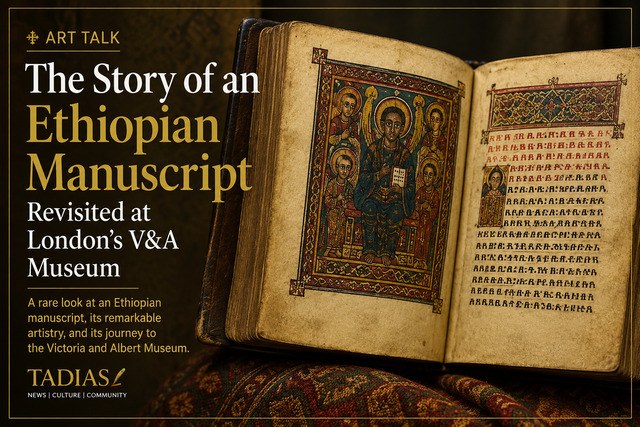
 Detail from an Ethiopian manuscript revisited in a recent feature by London’s Victoria and Albert Museum. (Photo: © Victoria and Albert Museum, London)
Tadias Magazine
May 2026
New York (TADIAS) — Bound in leather and written in Ge’ez, an Ethiopian manuscript preserved at London’s Victoria and Albert Museum carries more than text across its pages. It also carries a journey tied to faith, art, scholarship, and history.
A recent feature published by the V&A revisits the story behind the manuscript, tracing both its craftsmanship and the controversial path through which Ethiopian treasures entered British collections during the 19th century.
Rather than presenting the work simply as a historical object, the museum’s research highlights the depth of Ethiopia’s manuscript tradition while reflecting on the growing effort by museums and institutions to better understand and document how African artifacts entered European collections.
For readers familiar with Ethiopia’s rich ecclesiastical and literary traditions, the manuscript also serves as a reminder of the enduring sophistication of Ethiopian bookmaking, illumination, and preservation practices that long predate many modern museum collections.
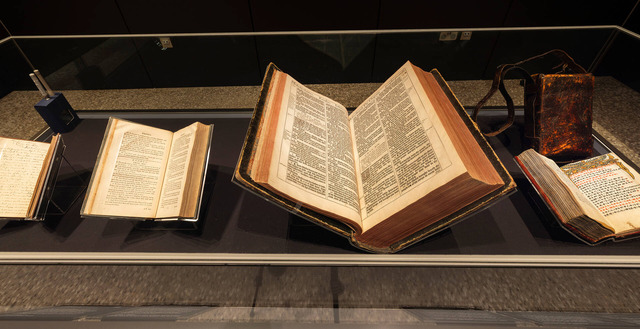
© Victoria and Albert Museum
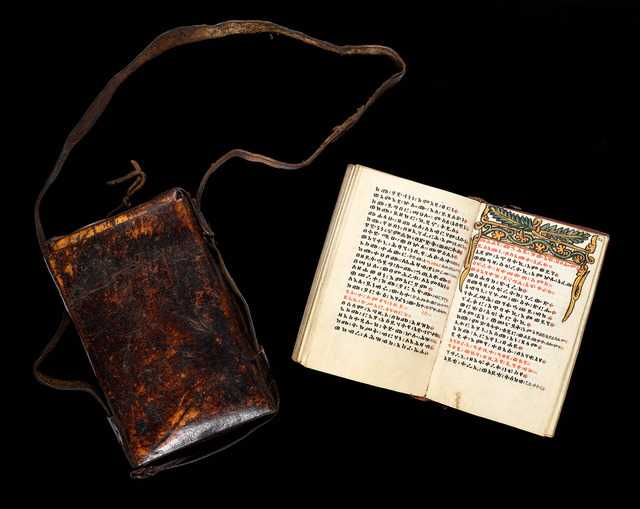
Song of Songs, written by Aleka Zeneb, around 1855 – 68, Maqdala, Ethiopia. (© Victoria and Albert Museum, London)
According to the V&A, the manuscript forms part of a broader Ethiopian collection whose history continues to be revisited through ongoing cataloguing and research efforts. The renewed study not only sheds light on how such works arrived in Europe, but also brings renewed visibility to the artistry and historical significance of Ethiopian manuscripts themselves.
Written in Ge’ez and preserved through centuries of religious and scholarly practice, Ethiopian manuscripts remain among the world’s most visually distinctive literary traditions, recognized for their illuminated imagery, hand-prepared parchment, and devotional significance.
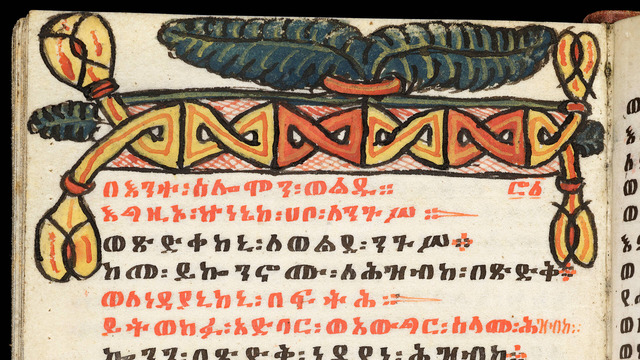
Psalter with canticles and Song of Songs, written by Aleka Zeneb, circa 1855–1868, Maqdala. (© Victoria and Albert Museum, London)
The V&A article also reflects a wider international conversation taking place across museums regarding African cultural heritage and the stewardship of historic collections. At the same time, the renewed attention offers audiences an opportunity to engage more deeply with Ethiopia’s longstanding artistic and intellectual traditions.
Beyond questions surrounding museum collections and historical records, the manuscript stands as another reminder that Ethiopian artistic and scholarly traditions continue to resonate far beyond the centuries in which they were first created.
Additional information: Victoria and Albert Museum feature:
—
Join the conversation on Instagram, X and Facebook.