Author Archive for Lifestyle Editor

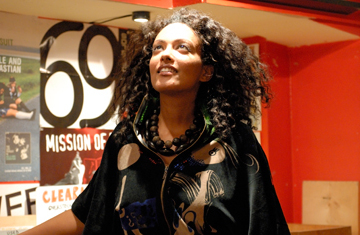
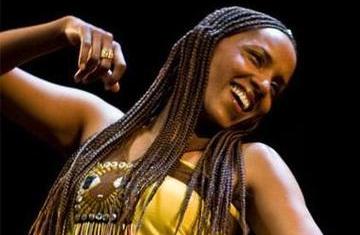
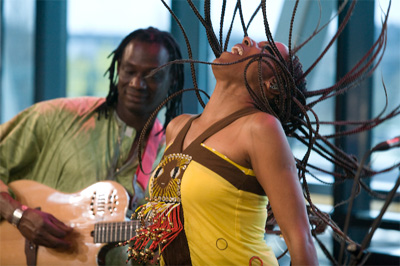
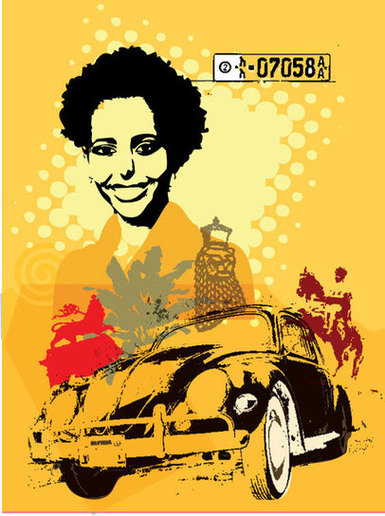
Sheba Sahlemariam: ‘The Lion Of Sheba’

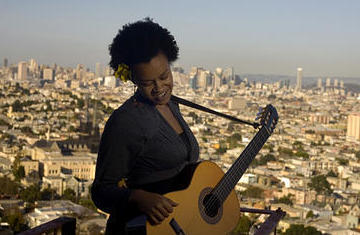
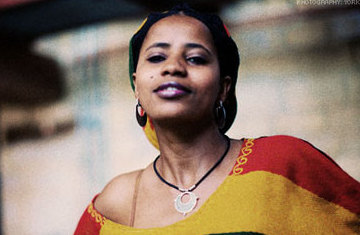
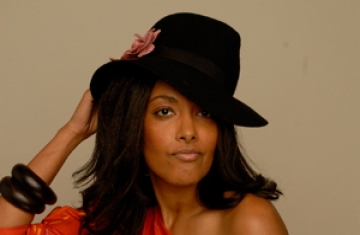
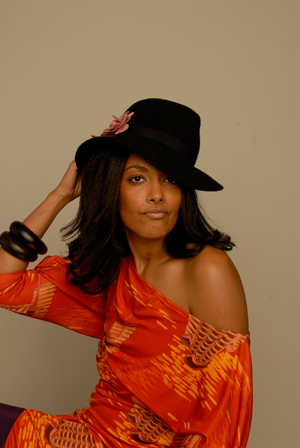
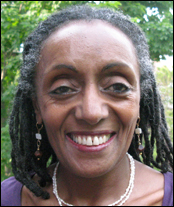
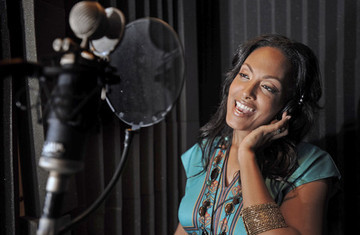
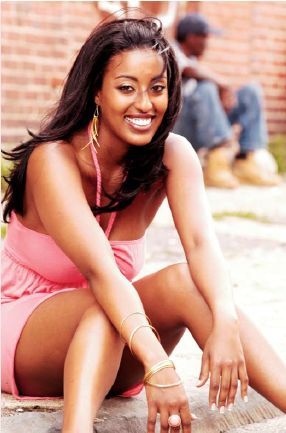
Above: Ethiopian born Sheba Sahlemariam’s music is a fusion
of many different cultures.

The Jamica Gleaner
Sadeke Brooks, Staff Reporter
Published: Sunday | December 20, 2009
The singer was born in Ethiopia but her family was exiled from the country when she was only a baby. Since then, she has lived in places like Germany, Guyana, Trinidad, New York, Canada, Kenya, and even Jamaica. Hence, her music is heavily influenced by varied cultures. “We did a lot of travelling when I was young and it has sort of given me a view that is very global. The music that I create sounds as diverse as my life. My life is about growing up in many different places. My life is a fusion of all those things and my music is a fusion,” Sheba told The Sunday Gleaner. “My musical style is fusing all the music that I grew up on; dancehall, reggae, Afro-pop, Ethiopian jazz and urban music. I am fusing all those things which sound like the soundtrack to my life.” The New York-based artiste said reggae and dancehall is also a big part of her music. Read more.

Video: Sheba Sahlemariam Live at Joe’s Pub (New York)

Source: Joe’s Pub

A refugee from the majestic war-torn land of Ethiopia, Sheba Sahlemariam was reared among the concrete jungles of New York City, Europe, the Caribbean and Africa. Named after the Queen of Sheba, famed empress of Ethiopia, to whom her family traces direct ancestry – Sheba Sahlemariam is a cousin to Emperor Haile Selassie – which highlights the serendipitous circumstances that moved her family from Ethiopia to Guyana, where she spent her early childhood and later, Jamaica, which deepened her connection to Reggae and Dancehall, the glue to her global and urban sound. Sheba stirs up a unique musical brew that is a mélange of Reggae grooves, Afro-beat, Ethiopian traditional music and jazz, R&B riffs, 16 bar rhymes, and Dancehall Sing-Jaying –souvenirs from her nomadic life.

Sheba’s gorgeous four octave range, soul stirring, provocative lyrics and fierce ability to dial up a diversity of musical styles puts her at the razor’s edge and will expel you from preconceived definitions of urban, pop and world music.

Watch: “Love This Lifetime” by Sheba Sahlemariam

As early as the age of four, she was singing and making up songs, but it wasn’t until a random meeting in Brooklyn, when Sheba forged a musical partnership with Tommy “Madfly” Faragher, that she finally begin to chip away at her lifelong dream to write and record music. Together they began to collaborate on what would be the basis for her first album: The Lion of Sheba. Songs from the forthcoming album are for real music lovers: big vocals, powerful songwriting and beats that challenge your boundaries. The wait is over. You may not be able to get to Ethiopia, but The Lion of Sheba will bring Ethiopia home to you. The Lioness, Sheba…soon come.

Hanatzeb Gallery to Host Second Exhibition

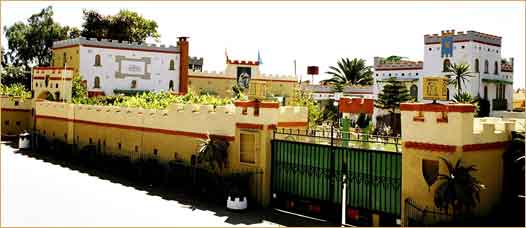
Above: Hanatzeb Gallery, located on Bennett Street, Atlanta’s
vibrant antiques and arts district, is focused on cutting edge
artworks from contemporary artists.

Tadias Magazine
Events News

Published: Friday, December 18, 2009

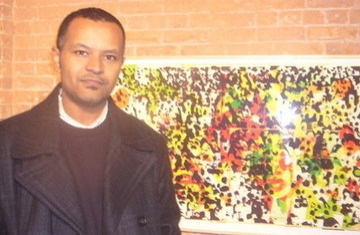
Atlanta (Tadias) – Hanatzeb Art Gallery, which specializes in emerging and established Ethiopian artists, will open its second exhibition this weekend featuring artist Eskender Seyoum, Alex Girma, Muluken Asfaw & Yosef Berta.

According to a press release by the gallery, its inaugural show highlighting works of artist Tesfaye Negusse was a success and has encouraged the owners to return with a more ambitious group presentation.

“With the latest exhibition featuring emerging Ethiopian artist the owners are well on their way to achieving their goal of growing the gallery in a spirit of collaboration with the artist community,” the press release said.

“While this is just a beginning we hope will be well received by the community at large, we have lined up a number of incredibly talented artists who live here in the U.S. as well as in Ethiopia to come and display their beautiful work of art.”

The opening reception is scheduled for Saturday, December 19, 2009, from 6-10pm and Sunday, December 20, from 2 -6pm.


If You Go:

Hanatzeb
Ethiopian Art Gallery
49-B Bennett Street NW.
Atlanta, GA 30309
Phone: 404.352.4373 or 404.808.8946

Interview with Marcus Samuelsson

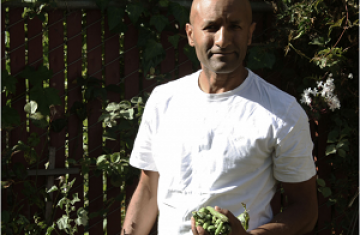
Above: Marcus, pictured here in the White House garden, was
selected to prepare the Obamas’ first State dinner. (Courtesy).

Tadias Magazine
Interview by Tseday Alehegn

Published: Tuesday, December 15, 2009

New York (Tadias) – It has been a busy year for Marcus Samuelsson. A few weeks after the release of his book New American Table, Samuelsson was invited by the White House to prepare the Administration’s first State Dinner honoring the Prime Minister of India.

“It was an honor for me not only to be asked but also to do it,” Samuelsson tells Tadias.

Samuelsson says he was primarily thinking of diversity while preparing the State Dinner assisted by ten members of his own staff. “I tried to think of diversity on different levels, not just the food,” he tells us.

Below is our interview with Marcus Samuelsson about the White House State Dinner, his new book, and living in Harlem.

Tadias: When did you begin thinking about writing New American Table?

Marcus: I began working on the book in my head around 2004/2005, right around the time I became an American citizen. I really started to think about diversity. How do I explain Ethiopian heritage? How do I define my Swedish heritage? I am privileged to be in America where I can actually be Ethiopian, Swedish, and American. And as Maya and I got more and more together we started thinking about how to keep our identities through food. And not only that but I realized that all my friends are immigrants. It’s Jewish people marrying Arabs, Pakistanis marrying Germans, Latin people marrying Swedish people. And all of them are keeping their food heritage. And more so than language, it’s through food that they are keeping their identities. Food is a celebration of diversity in America. I don’t know any other nation where you could keep all these cultures alive and on top of everything you are also American. And I thought that it was really cool. There is also the recognition of the growth of immigration. Think about how Ethiopians came to this country. In cities now we have on average about six or seven Ethiopian restaurants. That’s incredible. And it’s a way for us to keep our identity. And it’s not only the Ethiopian community that I’m talking about. I’m talking about Vietnamese community in Minneapolis, Latin community in Chicago, Nigerian community in Boston. We know it’s Latin in Los Angeles and Texas and so on. Those are the obvious ones, but I’m talking about the not-so-obvious diversity; the Koreans in New Jersey, Middle Easterners in Detroit.

I always write. I always take notes wherever I am. Food is my language. I cook with friends, I cook in the restaurants, for magazines. I always write and connect my recipes to my outlets. My creativity goes with the diversity. I didn’t want to make a narcissistic book about me, but about everyday people. That’s why I do the collages in the book. The book only works if it’s about the everyday person, the New American. Everyone from kids to the elderly can recount stories of food. Whether it’s stories from the Second World War or stories about leaving Ethiopia, or stories about leaving Sweden, they are all stories about us.

The other thing to note is the enormous Farmers’ Market boom. I wanted to include this in the book. When I came to New York you could barely buy cheese or great bread. Now you have a resurgence of artisanal food makers, and I wanted to touch on that. People are going back to ‘local’ to ‘organic’ to ’seasonal.’ I wanted to celebrate that. We are slowly going in a greener direction. And that’s the conversation about food that I want to keep having. I’ve already written a book about restaurants. I’ve done that. Going forward it will have to be about people, and how people inspire me. I’m not a politician, I’m a chef, and so I tell my stories through food. Like an artist’s paintings would show what he’s going through or what he’s reflecting on.

Tadias: When was the moment, during your work or travels, where you felt that what you were experiencing should become a book?

Marcus: I’ve been American for a while now and in the beginning of the book I talk about becoming American. As a Black person I wanted to come to America rather than stay in Europe because there are more opportunities here as a person of color. I think a lot of people can relate to that feeling. Of course you have doubts and you don’t know if it’s going to work out, but you work hard and it will. This book was also written at a very particular time. This was written post 9-11, in the middle of the Iraq/Afghanistan war, very patriotic stuff. I feel that sometimes the image of America in the rest of the world is not that great, but I feel that diversity, food, these are things that we are getting right. These are things that we can be inspired by. This book was written in a time of transition. I began writing in the Bush era and the book is out in the Obama era.

Tadias: Can you share one or two of the untold stories behind the food that you describe in New American Table?

Marcus: There’s a couple, friends of mine. She’s Pilipino and he’s Swedish and African-American. Every year they have a dinner where when you go to their house they have about 25 different dishes. And the food is from Black culture, Pilipino culture, Swedish culture. And they’re not chefs. That’s inspiration. Their friends are just as diverse, from Ethiopia to France. This is the diverse food life that I wanted to live, and now I’m living it. You know even when Maya cooks Doro Wat and our friends who are not Ethiopian are enjoying the dish, what are we doing? We’re telling a story about Ethiopia. So all of us who are Ethiopian-American are actually ambassadors for our own country. There is an exchange of culture here but we’re not asking you to change your religion or faith or beliefs. We are simply the culture and we are sharing the food. So we’re shifting the dialogue to something positive, something tangible.

Tadias: Looking back at the history of food in America and the traditional American dining table, how would you describe it now?

Marcus: Well this is an evolution. We were very much England/Europe-inspired for a long time. And now you’d hear someone say “Hey I had sushi last night, and I had Ethiopian the night before.” So you’ve gone a complete 180. We’re completely embracing diversity through the food, and before we were taught to hide it. So it is a sense of arrival to say “I had sushi, I just tried a Moroccan restaurant, I had Indian the day before.” Even in cooking the State Dinner we were cooking an ethnic meal at an American State Dinner.

Tadias: How was the experience of preparing the White House State Dinner?

Marcus: It was the highest honor. That was Barack Obama’s first State Dinner so it was extremely important for him. And it was an honor for me not only to be asked but also to do it. Michelle wanted a vegetarian dinner as much as possible as Mr. Singh is vegetarian so we came with fresh but very humble ingredients. These were not the ‘best dishes of Marcus Samuelsson.’ For me, when I did the State Dinner I wanted to show the best of America and the best of India. I also wanted to show the White House as someone’s home. Therefore we introduced a bread course, where we broke bread and had both corn bread and naan bread, which they’d never had at a State Dinner before. It was the first time that all fresh ingredients and herbs were supplied from the White House garden. We had lentil soup, which was very Indian for me, but we also had American seasonal apples. The dumplings and green curry prawns were Indian but we also served All-American dessert, Pumpkin Pie, and we served All-American wine. So it was a complete marriage for me looking at both cultures. The smoked collard greens served were from African American culture. Why not serve that as a testament of diversity instead of making the best possible Foie gras that you could do? I also brought my staff, half of them were girls and half were guys. Some were African-American, some of them were Jewish, so I tried to think of diversity on different levels, not just the food.


Marcus picking herbs from the White House garden (Courtesy photo).


Marcus at the White House kitchen chopping herbs that he picked from the
White House garden in preparation for the Obamas’ first State dinner.

Tadias: How many staff did you take with you?

I brought 10 with me.

Tadias: So what are your next steps? What’s in the horizon? What kind of ventures are you thinking of now?

Marcus: Moving forward, I’m thinking, “What can I do in Harlem?” I’m thinking about public school and food. I’d also like to bring more Farmers’ Markets to Harlem. I live in Harlem and I go in stores and there are no green vegetables in the market. You can go to any market in Ethiopia regardless of income and you can get local eggs and organic. Here, if you don’t have money you eat poorly. It’s one of the only countries where low income and eating poorly is connected. I would like to change that. At least I would like to raise awareness by cooking in the community, or definitely enabling people with low income to have better choices when it comes to food. So those are the kinds of things that I care about.

Tadias: What do you like most about Harlem?

Marcus: Harlem? I always wanted to live in Harlem. Harlem was the community that I knew about when I was in Sweden. It was what I knew about America and African-American culture. I’ve always thought about Harlem. And I also think that if Harlem’s going to change then people like myself and others should stop talking about Harlem and move to Harlem. Harlem is not going to change because we talk about it. It’s going to change because we do something. And I put my money in the economy. For me it’s not a PR stint. For me it’s a lifestyle. I sold my place and moved to Harlem to experience it. And I can’t write about an experience without having lived it. When I shop at C-Town, for example, it’s not because I’m happy to shop there, it’s because I want to have the same experience that the person who lives in this community has. When Maya wants to go to Whole Foods or somewhere else, I say, “Well we can do that too but we also have to buy from here as well because we gotta know what the hell we’re talking about.”

Tadias: Any other thing you’d like to add?

Marcus: I look forward to going to Ethiopia for New Year’s and I look forward to eventually have a cooking school in Ethiopia. To have a hospitality school in Ethiopia – that’s my ultimate goal. I’ve experienced a lot of stuff, and it’s also my job to give back and to challenge people who have money to contribute. It will bring a different dialogue. It’s like what bringing Lucy here does – it starts a dialogue. Same thing with the Discovery Show about the oldest human being, or what Ras does with his film, ‘The Athlete’ when he narrates the story from an Ethiopian perspective. It’s what you guys do; it’s bringing a different view, which is incredible. It’s important to keep producing, keep writing. Even what Maya does; she’s in Korea right now doing a shoot for Olympus Camera. For other people to see that that’s possible is incredible. I’m in awe of all that. I also love one of the pieces that you wrote about Ethiopians that have done stuff in America, because you do exactly what I think about a lot – to inspire to aspire. You read that article, and if you’re not in that article, you want to get in that article. It’s fantastic. It’s inspiring. Regardless of who it is, it’s more about the message.
—–
About the Author:
Tseday Alehegn is the Editor-in-Chief of Tadias Magazine.

Video: Marcus with MSNBC anchor Dylan Ratigan

Visit msnbc.com for breaking news, world news, and news about the economy

The Saint Yared Choir Performs At The U.N. Tellman Chapel

Above: The Saint Yared Choir of Washington D.C was featured
as special guest at NNN’s event held the U.N. Tellman Chapel
on Sunday, December 6, 2009.

Tadias Magazine
Events News

Published: Saturday, December 12, 2009

New York (Tadias) – The Saint Yared Choir of Washington D.C. gave a breathtaking concert at The United Nations Tellman Chapel last week.

The event, hosted by Nation to Nation Networking (NNN), a non-profit organization based in New York, featured vocal ensembles of diverse backgrounds including: The Inspirational Voices of the Abyssinian Baptist Church in Harlem, The Hai Tien Chorus, and The Children’s Theatre Company of New York.

The St. Yared Choir was established by the Debre Selam Kidist Mariam Church (St. Mary’s) in Washington D.C, to celebrate the life and work of St. Yared, a composer and a choreographer who lived in Aksum in the 6th century AD.

According to Ayele Bekerie, a Professor of Africana Studies at Cornell University, “Zema or the chant tradition of Ethiopia, particularly the chants of the Ethiopian Orthodox Tewahedo Church, is attributed to St. Yared…he is credited for inventing the Zema of the Church; the chant that has been in use continuously for the last almost 1500 years.”

The voices and choreographed movements of the St. Yared D.C choir was led by Mr. Moges Seyoum, recipient of the 2008 National Heritage Fellowship for his “artistic excellence” and “cultural authenticity” – the highest honor in folk and traditional arts awarded by the National Endowment for the Arts.

The concert’s theme: “Building bridges across cultures and fostering a broader understanding among peoples and communities of all nations.”

The afternoon musical testimony of diverse faith was moving and enchanting.


Proceeds from the event is going to fund NNN’s annual International Youth Assembly and the completion of the organization’s Adolescent Resources Centers in Africa and the Caribbean.

Slideshow: More photos from the U.N. Tellman Chapel

Video: St. Yared Celebration at St. Mary’s in D.C. 3 years ago

An Entertaining Interview With Robel Kassa

Above: Robel Kassa’s recent works “revolve around an idea of
distance: physical, mental, and conceptual. So there are “dark”
concepts that are portrayed in bright and cheery colors. Serious
social taboos presented in utter abandon and humor.”

Tadias Magazine
By Tadias Staff

Published: Thursday, December 10, 2009

New York (Tadias) – Talented graphic designer and entrepreneur Robel Kassa has some of his most recent works currently displayed at La Carbonara Restaurant in D.C. The display “revolve around an idea of distance: physical, mental, and conceptual. So there are “dark” concepts that are portrayed in bright and cheery colors. Serious social taboos presented in utter abandon and humor,” says Robel. Below are photos from opening night and an entertaining interview with the artist.

Tadias: Please tell us a bit about yourself – where you were born, raised, school, current work, etc.

Robel: I was born and raised in Addis Ababa, Ethiopia, where I was circumstantially stationed for residence and schooling procedures until I completed my high school studies. Upon said completion, the forces that be (commonly referred to as “one thing led to another”) decided that I relocate to the the University of Pennsylvania. I’m not sure of the coordinates, but I’m fairly certain it was located in Philadelphia. That’s what the brochure said, anyhow. I managed to acquire a black cap and gown (which I was ultimately forced to return … the bastards!) and a US Letter sized piece of heavy stock paper with elaborate calligraphy that indicated I was now fit to flaunt my ego and fatten my wallet wherever I please … within the realm of creative/digital arts. So in the spirit of economic synchronicity and tongue-in-cheek irony, I now work for the American Bankruptcy Institute, in all manners and shapes and sizes of graphic design and web development … making bankruptcy entirely way too sexy and irresistible. Of course, this being America (the land of mirages and camouflages), I have assuaged my cubicle farm shenanigans by setting up an independent design firm with a few partners: www.paradigm84.com : global domination seems a lofty goal, but we’re taking it one click at a time. (*insert ominous soundtrack here*)

Tadias: Over the years, we have seen your impressive and evolving digital artwork. What other mediums do you use?

Robel: I’ve used and continue to use oils, acrylics, and other mixed media. Everything from razor blades to condom wrappings to pages ripped out of the bible make for legitimate resources.

Tadias: What motivates you?

Robel: Motivation had been elusive for a long time, actually. And whenever it happens, it’s fairly whimsical, egged on by irony, cynicism, music, literature, film, social/political situations, and a healthy dose of humor. I’m not sure what I just said answered your question satisfactorily, but feel free to chalk that up to “artistic quirkiness.”

Tadias: We understand that you have a show of your new artwork in D.C. Could you tell us a bit more about it?

Robel: It’s hosted by the kind ladies of Spirito di Vino, and opened last Wednesday at La Carbonara Restaurant. It will be up for the remainder of the week for general veiwing as well. The works, most of them recent and not seen before, revolve around an idea of distance: physical, mental, and conceptual. So there are “dark” concepts that are portrayed in bright and cheery colors. Serious social taboos presented in utter abandon and humor.

Slideshow: Photos from Robel’s Art Show at La Carbonara

Photos courtesy of the artist’s Facebook Page.

Tadias: Which individuals influence your artwork? philosophy?

Robel: A lot of individuals do. Aesthetically, it ranges from Jackson Pollock to G/Kristos Desta to graffitti artists and comic book illustrations. I try and stay away from what is visually recognizable as typically “ethiopian art” … whether it’s the big googly eyes, or the Tilet-like patterns, or even the nauseatingly melodramatic and self-righteously judaeo-christian iconographies. I feel that’s just a gimmick and selling point that furthers the exotification of non-Western art as something ethnic, tribal, primordial, and other-worldly. It can be limiting, I suppose.

Tadias: If you were given a chance to spend a year to create an original work what would be?

Robel: The ultimate “original work” would probably mean less to me than the year spent trying to create and destroy and re-create and lather, rinse, repeat. Whatever that original work would be though, I feel it probably would either be a book or a film. Something that would purge the world of all its evils … and cure AIDS … and bring about world peace. And I also like walks on the beach.

Tadias: Is there anything else you would like to share with our readers?

Robel: Read books; they’re good for you. Never underestimate the beauty of honesty.

Tadias: Thank you Robel and good luck!

Robel: Thank you, Tadias. This has been utterly discomfiting.

Cross-Cultural Music Improvisations: A Conversation with Dan Harper

Above: Tadias Magazine spoke with Dan Harper about his new
album “Punt Made in Ethiopia” and his work to create cross-
cultural conversations through music. (Courtesy photo).

Tadias Magazine
Interview by Tseday Alehegn

Updated: Monday, November 16, 2009

New York (Tadias) – As an aid worker for a British NGO in Ethiopia, Dan Harper (Invisible System) lived and traveled throughout Ethiopia for three years. He also nurtured his first love: music, and built a studio from scratch to produce and collaborate with Ethiopian musicians. Harper describes his Worm Hole studio equipment as something which “can be setup around scarce resources such as in an outhouse with corrugated iron roofing (interesting in the rainy season), carpets and breeze blocks. It is also now constructed in a more solid form in Frome, Somerset whilst maintaining its nomadic and professional feel and look.” Harper co-wrote and sound engineered Dub Colossus’ album “A Town Called Addis” with Nick Page, and most recently came out with his own album “PUNT Made in Ethiopia” (Harper Diabate Records) featuring an incredibly diverse list of musicians, ranging from talent he spotted at a traditional Azmari joint to sessions with singer Tsedenia and the legendary Mahmoud Ahmed. Harper stresses that the collaboration is not trying to imitate how Ethiopians play music. Rather it’s an entirely improvisational recording. Invisible System has played at the Addis Music Festival as well as several live concerts in the U.K. Proceeds from the album are helping to establish a charity focusing on providing resources to artists and musicians in the developing world, an issue which Harper believes is often neglected by international NGOs.

We spoke with Dan about his first album release on Harper Diabete Records and his work to create genuine cross-cultural conversations through music.

Tadias: Can you tell us a bit about yourself? How you ended up living and working in Ethiopia?

Harper: Before I start, I’d like to say it’s really nice to be involved with Ethiopians and Ethiopian culture and music. I have very fond memories of Addis, and I traveled all around the country. I had volunteers all over the place. I’ve been to Jimma, up to the North, I’ve been to the South, Lake Langano, Awasa. It’s been so long now that I’ve even started to forget the names of all the places… Gonder, Mekele. Fantastic country really.

Okay, so I grew up in England. Mother was born in India, raised in New Zealand and she moved to England when she was 18. My dad comes from a working class coal miner and army background. He later became an academic. I grew up in the southwest of England. I always wanted to go to Africa..always fascinated. Even as a kid, when I was 12 I was listening to bands that infused African rhythm and sound. Something always hit the mark for me. A lot has driven me to Africa. Also, I’ve always had a thing about development and the problems of developing countries and the injustice of it all. And that is ingrained from a young age as well. I used to complain when we had three course meals when I was 11 or 12 saying there were people who can’t eat in the world. It’s just been part of me. So that’s me: I love art, I love music. I’m interested in international culture. I love different ways of talking, and eating, and interacting, and different clothes and hairstyles. I think that’s what’s magical about the world.

I’ve always been fascinated with music since the age of 7. I’m obsessed with it I think. I’ve taught myself to play everything. I’ve taught myself to produce, to sound engineer. I’ve built my own studio. I’ve done it without the equipment being bought for me. I’ve had to work hard for it. And I’ve had to build it bit by bit. And I’ve been in constant debt for it, so it’s an absolute love, and passion, and something I can’t stop doing.

When I left school I bought a camp van and I worked and I drove around Europe and down to Turkey with my girlfriend, and had an interest in international development and culture since then. Since seeing people live in cardboard boxes as I drove around. And at university I changed very quickly from studying computing management to studying environmental management, although I probably should have done, music, technology or both. But there you go. Both things come together. I had wanted to work abroad in NGOs.. I was always quite anti-government. I grew up in Thatcher’s government so plenty of reasons to be upset. And I had to volunteer for years..there was no paid work in Environment. There was no way to go to Africa. You had to pay for yourself. I had no money. I was trying to build a studio that was getting me in debt, and eventually I had to go into business. Didn’t enjoy working in business. Had to cut my hair which was awful and wear a suit which was awful – not me at all. And I ended up working for the Institute of Development Studies at Sussex University in quite a basic, boring admin job. I knew it would springboard me overseas and I took a job up in Mali eventually, which I was very lucky to get after a few years work experience. I learned French and worked for a local environmental NGO. I was in the middle of the desert. It was really hard work, hard conditions, teaching kids about environmental issues. And I met my wife out there, and I worked there for four and half years and I have a daughter.

We could afford to get on as a family there so I thought I better try to get a better paying job, as I wanted to stay overseas. I wanted to stay in Africa. And a job with a British NGO came up and I got it and it was in Ethiopia. And unfortunately Ethiopia, I think, has been spoiled by the media and the problems of the famine. Because everyone thinks about famine and dry, desert conditions including me. I was as guilty, because I thought “I’m going from one desert to another.” And it’s not is it? I mean how green, and lush and beautiful is Addis, Jimma and even some places in the North. Not that barren. I’m not going to get into the history and the problems. Those are things for us to discuss another time. Complicated history and reasons. But sure I was out in Ethiopia for three years, and I have a fair idea of what went on. I have a few Ethiopian friends who I’m still in contact with. But that’s how I ended up living and working in Ethiopia. And it was a three year contract. I had a great time with the Ethiopians I work with. I had volunteers out helping government and non-governmental organizations in HIV/AIDS and small business. I didn’t enjoy working for voluntary service agencies – the British organization. I didn’t like their obsessiveness with bureaucracy and paperwork, and they weren’t getting the volunteers out efficiently as it could have been. I didn’t like the attitude of the country directors who were British. I didn’t think that they treated the Ethiopian staff as well. But Ethiopia was great, Addis was great. I had a fantastic circle of friends. I had a great social life. And I was trying to help in every which way I could through the development work, and bringing as many volunteers as I could out to work with people from all over the world. My idea was to create more volunteer positions, and get volunteers out there and make a change. So that’s how I ended up out there with my family.

Tadias: Can you describe the role of music in your life? When did you start producing music?

Harper: God, without music it would be awful. When I’m listening to and playing music that is my ultimate meaning of the world. Work could get boring everyday, you know, doing things that you don’t always want to be doing. [Music is] escapism in a way, but it’s like my religion, it’s like my spiritual being. It’s my way of releasing all the creativity, the need to make colorful and creative things and sounds, and this is my way of doing it. And without it I would be bored and grey and depressed. There’s more to life than writing paper, for me anyhow. I think everyone’s different. I started producing music when I was about seventeen, and I bought and taught myself how to play an electric guitar, and started playing in a band. I borrowed a friend’s four-track tape recorder and started overlaying guitars like that, and you know it’s gone on ever since. Teaching myself the guitar, drums, bass, keyboard, synthesis, sound engineering production, using the studio.. the full works. It gradually increases. I’ve never had enough time for it. I’ve always worked full time. It always been get in, fighting fatigue from work drinking coffee to write and produce music. And it’s difficult because you never have enough energy, and at the weekend you’ve gotta clean your house, and well now deal with the kid as well, and try to have a social life so. Yeah it’s been going on since I was 17. I am now 37. I should have had an album out years ago. But there you go.

Tadias: And the artwork on your CD cover?

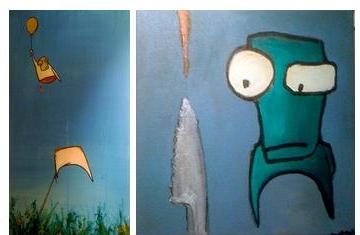
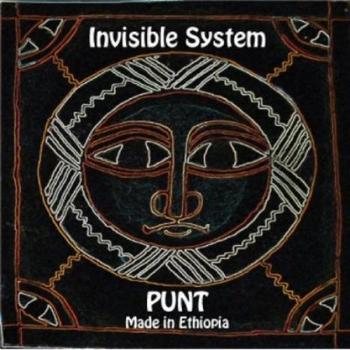
Harper: The art work was a mixture of myself and Bos / Warp (Paul Boswell) a graffiti based artists in Frome who is well known for his work in Bristol, and Moussa from Addis. The painting of the musicians was created by Moussa to say “thank you” to me. Moussa was an orphan and he was lucky enough to make it to study music at Addis University. He is a lovely guy and I sorted him out with a job teaching my neighbour’s child the guitar. My neighbour was English and she had married an Ethiopian in Addis. We forwarded him some salary and when I was in the UK I purchased him an electric guitar that my neighbour brought back to Addis for him. He was so happy he made me that painting. I changed it color and vibrancy-wise to match the feel of the album, but the original is also wonderful and will be published perhaps on the next album.


Punt, Made in Ethiopia album cover.

I love Bos’s humour, it always makes me laugh but with the album, the faces he had painted by chance reminded me of the Ethiopian painted faces you often see with big eyes. I liked the connection due to the fusion nature of the album covering styles of Ethiopian, Pop, Dance, Trance, Rock, Dub, Reggae, Drum and Bass, Punk and Grunge. It all fits! And the other painting of the chap/creature in the suit and tie reminded me of how it feels to be an artist trapped in the office in a suit and tie during the day! Personal! I have always combined aid work, which includes offices and suits and ties with my art.

Bos also plays bass on one track on the album and plays live with me sometimes with the UK Invisible System setup, which has a Jamaican born UK based reggae singer doing the vocals. I am also in another more punk/psycehdelic/jam based band with Bos on bass, me on guitar and Merv Pepler from the Ozrics Tentacles and Eat Static on drums. We have not decided on a name yet but some suggestions have arisen…Flaps, The Mutes and The Coalminers are three!

Tadias: Tell us a bit more about the music scene in Addis and your collaboration with various local and internationally known Ethiopian musicians.

Harper: When I first got to Addis, I found there was a lot of buzz where people would sing in front of electronic keyboards, with electronic drums, which wasn’t quite my kind of thing. And then I found the Azmari bets, which I loved more. The traditional..seeing the masinko, singing and clapping and dancing. I bumped into most of the people that I worked with within odd clubs around Addis, say kind of at two in the morning. That’s where I found Nati on the album, that’s where I found Desta. Just people whose voices I liked. I approached them after. Sometimes I needed translating because my Amharic wasn’t good enough – their English wasn’t good enough just to communicate. I often have my music on an MP3 player, and I’d put headphones on them and say “do you want to come and jam?” And that’s how a lot of it kicked off actually. Tsedenia was introduced to me via my wife’s hairdresser. My wife was having her hair done down the road and saying that I was recording in the studio at home making music. Mahmoud was a chance because I sold a mike to someone who turned out to be a friend to Mahmoud’s saxophone player who came, walked into the studio and loved what I was doing. He told Mahmoud that he has to come down and listen, and Mahmoud came and listened and loved it as well and just asked to be a part of it, which was fantastic. I knew who he was but hadn’t heard that much of his music to be honest. I have cracking cassette of Mahmoud that I bought out in Jimma. A really old one. I love it. I love the old rough sound of it..the scales and just things that wouldn’t come to the Western mind.

We grow up in such different cultures that even the tonalities sound different to us and bring up different emotions – it’s what makes the world go round. I loved working with people over there and I never tried to emulate what the Ethiopians were doing when they played. I think Nick tried to do that with Dub Colossus. But I’d invited everyone over and people were quite reserved. They’d say “What do you want me to play? How do you want me to play?” And I’d just say “Do what you want. Do what you feel.” I played them some music that I put together to improvise what you feel. “Don’t worry about what you think I want.” And that’s the magic of it for me. It all comes from each other’s soul. That nothing’s pre-arranged. It’s just pure music from our hearts and soul and that’s what it’s about at the end of the day. To put those two things together that come from the different languages and culture and feelings for me is what it’s all about.

Tadias: Can you explain the name that you chose (Punt, Made in Ethiopia) for your current CD?

Harper: I chose PUNT because Punt was the name given to that area of land that they believe was Ethiopia and what the Egyptians used to call Punt. The magic land. Where people would come back with artifacts, not just animals such as giraffes or lions but also myrrh and other kinds of incense that were biblical and were apparently from this magical land called Punt. I love the history of Ethiopia and England, and the kind of pre-commercialism culture and the spiritual culture. I like the kind of druids and animists that lived in England and Africa before. I’m sure it was hard in other ways. I do like modern life as well, but to go back to that kind of working Azmari musicians and the Masinko and the kind of traditional human element of it, and the magical way the music that we create was done. It all makes sense to me to call it Punt. So that’s where Punt came from. Looking backwards but moving forward.

PUNT is an album that was improvised, from scratch – all instruments and vocals. We are not into using Ethiopian (or Malian) samples or trying to quickly learn and imitate Ethiopian musicians who have their sounds, modes, scales, feelings and soul from their culture and country else we would be the neo-colonialists. We are into sharing, learning and exchange over time. The music is based on real life experience not from reading. It is played from the heart and soul of everyone involved. Their own interpretation thus tapping the ebbs and flows of our lives.

Tadias: What are your favorite memories of Ethiopia? Africa?

Harper: Wow, you just asked a huge question. My favorite memories of Ethiopia and Africa. They’re so many. I miss going out and eating injera and hot food. And seeing all those beautiful and incredible faces all around. And I miss going to Elsie’s bar – the kind of bohemian culture. And I miss my friends and I miss traveling around. I miss the hot spring pools like Wondogenet. I miss the more openness of a culture of people that are out and about more. It’s cold here. We all live in tiny little houses. It’s cramped in and tiny gardens in England. I’m not saying people don’t in Ethiopia and Africa. You know it depends where you live, but I miss the fact that people are out and walking more, and talking more. And I miss that I can push my daughter down the road and people would kiss her and pick her up and I won’t be scared. I won’t think there’s a problem with a child molester. And I can go to a restaurant and she’ll be off having a tour and the waitresses would take her off to the kitchen and the lack of the excessive rules and regulations we have here in driving and living and existing. I do see Ethiopia as quite bureaucratic also and I suppose especially in Mali I miss the slight element of chaos.

When I went back to play at the Addis Music Festival last year, and we were in the car and I just realized that all the cars were worming their way through a massive non-road of road. I miss all that. I hate all these straight lines and everything here. So there are so many things. There really are so many things. And I miss being in a foreign culture. It’s boring being in England all the time. Everything gets a bit grey and even the language and clothes and too many people are in mono-culture. I like being dropped in what appears to me a more exotic place because I don’t come from there. If someone came from Ethiopia and they were here for three years it would be exotic for them. I got married and had a kid so there are other good memories and I’d like my daughter to keep coming back to Africa. She loves Ethiopia. She used to understand Amharic and she was only three years old when we left and unfortunately she’s forgotten that now. So there are so many [memories] I couldn’t even put them down so I’ll move on.

Tadias: What are the highs and lows of independent music production?

Harper: The highs are: you can create what you want, when you want it, how you want it. You don’t have to argue with someone that a song should sound differently or needs to be more commercial or what order they run on the CD or what art goes on the CD. It’s a great freedom. The need to be an artist for me is to have the freedom of expression, whereas at work you have to curtail how you do things and what you write and how you present yourself. Art for me is about being you, being genuinely you, and doing it independently with your own studio, label and your friends and musicians around you..that you have a common desire together. And it’s fantastic. And also feeling and creating something off your own back..that you had a vision that became a reality and developed into something real.

Now the downsides of it are, well, money because I don’t have any. I’ve had no money to back this and it’s done on credit. There’s no money for getting visas and passports to bring Ethiopians over to play. You know it’d have to be backed by someone. The promotion is really difficult, because I’ve got no one to pay to do the PR. So on top of a full-time job and a family and trying to finish CDs and write more music, you’re trying to get your CD out there and contact people and journalists and send them copies – it’s endless. It goes on an on. It’s fantastic, it’s nice to be able to do it but I’m constantly tired, obviously. So you haven’t got any help is what I’m trying to say. And you haven’t got any resources. And the distribution is quite tricky as well even, because unless you’ve got a lot of money to pay a distribution company that’s hard as well as organizing gigs.

If you are signed to a contract with a major label you can be able to say “okay I can take two years off work” because I guaranteed that income. But I wouldn’t want it to have been any other way. I’ve loved the way it has happened. You can get professional sounds with your studio at home, the only problem is space. Sometimes you can work as loud as you need to, because you’re disturbing your kid’s sleep. We’ve got a tiny house here and my garage is my live room. It would be nice to have more space. When I worked in Peter Gabriel’s studio with Dub Colossus I could get the same sound here. I don’t think you need that expensive equipment. You need good equipment but not that expensive. But the space was nice.

I wouldn’t mind one day for someone to say to me “we’ll give you this much money” so you can concentrate on it properly for a year or two, and I wouldn’t mind some help getting Ethiopians over here to play with me and touring the world of course. It would be absolutely amazing.

Tadias: Anything else that you’d like to tell Tadias readers?

Harper: I just want to say that I loved being in Ethiopia and I loved going back to play at the Addis Music Festival, and I know I’ll go back again and I can’t wait to go back again. My daughter so wants to go back, because she remembers it and we have videos of her being there. And I really hope to get to America someday. I’ve never been to America and I’d love to play a concert with some Ethiopians. It would be wild. It would be fantastic. I really hope that you get to see us play live. I don’t know how it’s gonna happen but I hope. And I hope you all enjoy the album. I know Ethiopia may be different once you’ve been out but it’s a very strong country and it’s very proud, which I think is great. It’s never been colonized and Amharic is still the first language. But this album could be quite a shift in style and way of listening and thinking. I know that they don’t particularly like Dub Colossus over there yet. Tsedenia says they just kind of go “oh yeah it’s interesting,” but they prefer the traditional, but I’ve had fantastic feedback from people in Addis actually for the album which thrilled me because you’re always worried when you’re not fluent in Amharic. You think you might have chopped a sentence at a bad point because it sounds good to you, but if you’re not sure what they’re saying you might have ended it at the wrong place. I just hope you guys get something out of it and enjoy it and please buy it. Don’t pirate it because we’re setting up a charity here and it can help us with good hard work. Real work. And I want to keep this growing so please don’t pirate it. That’s the only other thing that I’d like to say. And get in touch. I’d love to hear from you all. Give me your thoughts. I miss speaking to you all out there. Thanks for the interview. Take care.

Tadias: Thank you Dan! We enjoy your album and look forward to seeing you in concert in North America sometime.

Dan Harper can reached at Dan@harperdiabate.com. Harper Diabate, 1 River Walk, Frome, Somerset, BA11 5HU: myspace, facebook.

About the Author:
Tseday Alehegn is the Editor-in-Chief of Tadias Magazine.

About the Album:
PUNT (Made in Ethiopia) by Invisible System
Invisible System present a 12 track fusion album of Ethiopian, Dub, Dance, Rock, Drum & Bass, Psychedelia, Trance, Electronica & live music. Traditional vocals / instruments meet the modern, electronic and brass. Live Europeans meet live Ethiopians. Our guests include:

Mahmoud Ahmed & Bahta Gebrehiwot (Ethiopiques)
Hilaire Chabby (Baba Maal)
Justin Adams (Robert Plant & Strange Sensation, ex Jah Wobble’s Invaders)
Tsedenia, Mimi, Tarmeg & Sami (now signed to Realworld Records)
Joie Hinton (ex-Eat Static & Ozric Tentacles / Here and Now / IGV)
Martin Cradick (Baka Beyond/ex-Outback)
Captain Sensible (The Damned)
Ed Wynne (Ozric Tentacles / Noden Inctus)
Simon Hinkler (ex-The Mission)
Dubulah (ex-Transglobal Underground, Temple of Sound, Natasha Atlas etc)
Perch (Zion Train)
Juldeh (Justin Adams, Realworld etc)
Elmer Thudd (ex-Loop Guru)
Gary Woodhouse (The Rhythmites)
Bos (ex-Junk Waffle and Warp Graf/Eat Static Artist)

Is Sex Important to a Relationship?

Above: Tseday Aberra is a Clinical and Forensic Psychologist.
She has a private practice in the southern California.

Tadias Magazine
By Dr. Tseday Aberra

Updated: Tuesday, November 3, 2009

Los Angeles (Tadias) – Nature has decided that men are more susceptible to sex than women. Women are blessed with taming their sexual appetites far efficiently than men. So when you ask women why they marry, they tell you it is for the affection and companionship. Men also tell you for companionship, but it is primarily for the availability of sex. Affection and companionship in a marriage includes sex for men. But I’m not so sure it is so for women.

People say marriage is difficult. Wrong. I say a husband and a wife make it difficult. Marriage is difficult for anyone who fails to understand what it means to be in one, and what it takes to make it fulfilling. It takes commitment and work, indeed, but it is certainly not difficult. At least it does not have to be.

Marriage requires understanding. It is an agreement based on an understanding between a husband and a wife. It is an entity that is created in order to give them meaning that otherwise does not exist. This meaning is completely subjective since its foundation is based on the unique agreement created by the two in the marriage. It requires both to participate and contribute willingly and completely. Otherwise, it would not exist in fulfilling form.

No one can definitely tell you what marriage is and what it is suppose to mean other than what I have just told you. You make of it what you want. The difficulty that comes with this freedom is knowing the limitations of what you can make of it. You cannot make it yours nor can he make it his. It belongs to you both. Once it is created, it has its own life and its purpose is to give you meaning. To create it, however, both of you are required to provide certain instruments that will keep it alive and fulfilling. These instruments are not negotiable. Among all of them, the most important is sex.

When a husband and wife decide to settle down, after having picked a mate of their choosing, what they do to keep each other depends on how committed they are to fulfilling the agreement. Their commitment in contributing the necessary instruments in giving life to the marriage and maintaining its viability is most crucial.
Times have changed. The 21st century has leveled the playing field so that the only thing a husband and a wife require from each other is companionship. The one element that will not be equalized, however, is a husband’s need to go to his wife for sex. Therefore, a husband comes into a marriage, having lost all his bargaining power, with a promise of one thing and one thing only: sexual companionship. A wife who is committed to her marriage ought to know the position of her husband. She ought to know his predicament. Being in a powerful position, a wife ought to know her husband is at her complete mercy. She also ought to know how she uses her power determines the vitality of the marriage.

If by some chance, a wife does not care to her husband’s needs enough and often, he will have a hard time acknowledging whether there is a relationship tailored to meet his benefits. Now remember, a husband comes into a marriage willingly, and should also be willing to give all that he has. He has volunteered to commit and participate. And in return, he expects sex. When I say all that the husband has to give, it encompasses all the instruments he contributes to create and maintain the marriage. A husband will not hold back whatever is needed to make his marriage a place of sanctity.

A wife comes into this marriage expecting affection and companionship. However, she has to come with a special instrument in particular. Yes, there are other instruments that she has to bring also, but…on a serious note…, she has to bring one thing…the IT…and the willingness to use IT and make IT available. Without going into detail what a husband brings as instruments to create and maintain a marriage because they are not as important as what the wife brings specifically, the instrument that a wife brings is by far the most essential piece of the marriage. The IT is sacred and essential. If you toy with IT, you will lose the marriage. If you hold on to IT, you will lose the marriage. If you ration IT, you will lose the marriage. Guaranteed!

Having already lost his bargaining power, a husband comes into the marriage knowing and hating to be in a position where he has to rely completely on his wife for sex. When she rations sex, a husband learns that his dear wife is conniving, selfish, mean, but most of all, untrustworthy. He realizes that his wife holds all the cards of intimacy and that she can always put him back in his place. Not as a man but as a husband, he sadly realizes that he cannot rely on her. His trust is broken.

Very often a wife forgets that her vindictive behavior leaves a scar on her husband that she cannot remedy at a later time. After a fight, there is a whole lot of “forgiving” that takes place by both, but very little of “forgetting” by the husband especially. What your husband would not forget is that one of the most crucial instruments that is required to create and maintain a fulfilling marriage is actually negotiable, and that it depends on the whimsy of a wife that he just found out to be conniving, selfish, and mean.

Let me tell you, dear wife, once such a doubt creeps into your husband, not only would you lose him, but definitely you would lose your marriage. Take it from me, there is no therapy in this world that will bring back the marriage.

Next time, before you decide to hold on to sex because you had a point to make, think a moment and realize what is REALLY at stake.

—————-
About the Author:
Dr. Tseday Aberra is a Clinical and Forensic Psychologist. She has a private practice in the greater Los Angeles area and also works for the California Department of Corrections. She holds M.S. in Marriage, Family, Child Counseling and A Psy.D. in Clinical Psychology. She is recognized as an expert by California Superior Courts and gives seminars nationwide on marriage, relationships, and friendship. She has made a guest appearance on Court TV.

OnLove: Megan McCarthy & Haile Gebregziabher (The Washington Post)

Above: “Megan, who is of Irish ancestry, and Haile, born in
Ethiopia and raised in Eritrea, celebrated with an Irish-Catholic
ceremony that incorporated Ethiopian traditions, followed by a
reception featuring American and Ethiopian foods and music,
and a three-tiered cake decorated with shamrocks.” – WaPo
(Patricia Mccarthy Photography ).

The Washington Post
Sunday, September 27, 2009
Megan McCarthy, 36, is a membership director for a private club. Haile Gebregziabher, 41, is an administrative manager for a homeless shelter. They live in Annandale.

How they met: Read more.

Nyala – The Ethiopian Way (Restaurant Review)

Above: Nyala Ethiopian restaurant located in L.A.’s Little
Ethiopia neighborhood.

Restaurant Review
Entertainment Today
Written by SHIRLEY FIRESTONE
Friday, July 17, 2009

The area from Olympic Blvd. going South on Fairfax Ave. has become an Ethiopian bistro walk with a slew of eateries. I had dinner at Nyala, forerunner of Ethiopian restaurants in the area who’ve had many fine write‑ups because the food is good and it’s a new experience in dining for many. Interesting artifacts are part of the charm, including a full‑bar, (also Ethiopian wines, coffees & African beers) paintings displaying their unique style of cooking, and scenes of family life. The place is large with booths and tables, but the focal point is a wonderful simulated thatch hut. First-timers are always surprised upon entering, and what a great place to entertain guests, because dining the Ethiopian way is very social. In fact, it all starts with food, beginning with a complimentary community platter of “humus” served with crispy triangles for dipping.
Read More at EntertainmentToday.com.

Related: Ethiopian food in Omaha
Ethiopian Exchange (The Reader)

Family style and spice make
restaurants nice

by Lainey Seyler

In fact, the first time I went to Ethiopian Restaurant, 25th and Leavenworth, at 6:45 p.m. on a Friday night, I expected it to be open, but they had stopped serving food at 6:30 p.m. I could see, from my vantage point in the adjacent African grocery store, a few diners finishing meals and watching the restaurant’s flat screen TV broadcasting news and sports from Ethiopia. I could smell spices throughout the store and was immediately intrigued. The restaurant’s owner Ahmed Mahmed informed my group that they didn’t have enough food remaining — some menu items take all day to roast, so when it’s gone, it’s gone until tomorrow. He apologized and gave my friend’s son a mango juice box from the grocery’s fridge.

Read More.

Interview: Theater Director Weyni Mengesha

Above: A Canadian of Ethiopian descent, Weyni Mengesha
is an accomplished director, actor, composer and the founding
member of “Sound the Horn”, the group that organizes the
annual Selam Youth Festival.

Tadias Magazine
Interview by Aida Fikre

Thursday, July 16, 2009

New York (Tadias) – The following is an interview with the critically acclaimed Theatre Director Weyni Mengesha, one of the founding artists of Sound the Horn – the organization behind the annual Selam Youth Festival in Toronto, Canada.

The event, which marks its 5th anniversary this year, was initially developed to empower Ethiopian and Eritrean youth in Canada through education in the arts to raise awareness about the growing number of HIV cases in both communities. Here is an interview with Weyni Mengesha:

Tadias: How did the concept for Sound the Horn and the Selam Youth Festival come about?

Weyni Mengesha: In 2004 I was a member of People to People Canada’s youth committee along with Jerry Luleseged, Maraki Fikre, Eden Hagos and Shae Zeru. We were asked to create a panel to address the rising rate of HIV within the young members of our community. We felt that it was an important issue but that a panel would not be engaging for youth, and that we needed to do more than deliver statistics. We developed a youth arts festival because we thought the rising rate could also be a symptom of a larger problem. We started thinking of our own confusion around our identity as Ethiopian-Canadians, culture gaps with our Canadian peers, misunderstandings with our parent’s generation and the culture of silence around sexuality. Being misunderstood and lost without open communication within your household could leave young people vulnerable to risky behavior and poor choices around healthy relationships and sexuality. Sound the Horn was developed after the great success of the first festival when we decided to develop the idea further and name ourselves. We have been working together since, developing the festival and training the next generation of artists and community leaders. Sound the Horn leadership program trains ten members a year in different artistic disciplines, health education and leadership skills.

Tadias: With all the major obstacles that plague African and other third world countries, what was the driving factor in choosing the fight against HIV/AIDS as a main cause for Sound the Horn and the Selam Youth Festival?

Weyni: The original idea was developed with People to People Canada whose focus is HIV education and support, locally and back home. It is a reality we need to be educated about, but it is also an entry point for many discussions around what is causing this to be such a big problem among people 15-26. We thought the best way to find this out is to promote communication between this age group and our community. The festival provides a platform for them to express themselves. There is content around HIV education but there are also many other issues raised through the artists who are free to perform what they want. Ultimately it is a festival built to empower and connect our community and make it healthier.

Tadias: What can people look forward to in this year’s installment of SYF?

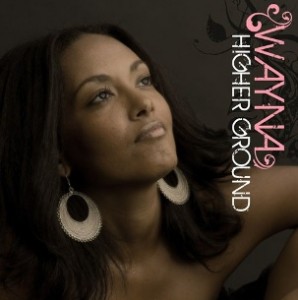
Weyni: We are excited to be bringing Wayna to the festival this year. This will be her first performance in Canada and we are always happy to connect our community to artists from different cities who are gaining success in their respective fields. I think our audiences will be inspired by her story of dedication, hard work and passion that lead her to her dreams. We are also excited to have Aida Ashenafi’s film Guzo which is also a Canadian premiere. I think it will offer many of the young people who have not been back home a better perspective of it. I am also very proud of our own film built by the Sound the Horn leaders that is premiering before Guzo. It is a ten minute short called “The Gap”. It is about mothers and daughters and the generation gap. I think there are lots of important issues raised with heart and humor.

Tadias: Where do you see STH & SYF in the next 5 years?

Weyni: We have moved from a one day to a three day festival within the five years and I look forward to being able to develop it further, especially in the film section. We would love to present up to four films a year. We would also like to connect with different cities and maybe make a ‘best of’ show and take it on the road.


Weyni Mengesha (Courtesy photo).

Tadias: What inspires you to get involved in the community?

Weyni: I was frustrated growing up in Vancouver as one of the three people of color in my school when the only reference others had for me was from the “we are the world” music video. I remember being excited about the Ethiopian actress on general hospital. I was so hungry to see a reflection of myself in society. This is how I got into the arts, and I credit it with keeping me on the right path. If you don’t find a true reflection you can be vulnerable to investing in whatever images you find. Some of the images I found in the media around what it meant to be black were not productive. I started to create my own expressions, which is a skill I want to offer to the next generation. Sound the horn leaders create work through film, theatre, poetry that is true to who they are and their cultural realities. They become confident and skilled in speaking out and expressing their ideas with their peers and society. I feel the arts can have a huge impact on a community.

Tadias: You are a well known and critically acclaimed Theatre Director in Canada. What are some of your exciting career highlights?

Weyni: I feel very blessed with my career thus far, I have been able to play shows across Canada, in New York and London. I love traveling because you learn so much about a society by the different ways they receive your art, I find it fascinating and very rewarding.

Tadias: What is your advice to Diaspora Ethiopian/Eritrean up and coming artists, directors, musicians, etc.?

Weyni: I am afraid it is not going to be anything new but I do feel it is true, stick to your dreams. The more you believe in your dreams and couple them with hard work, the more you will see things fall in into place. Make time for yourself to check in , keep asking yourself what you really want to create. As an artist one of my key tools are my instincts, time alone with your thoughts can sharpen your instincts and keep them unaltered from everything around you which could water down your unique quality.

Tadias: What should we be looking forward to from you, artistically? Any future projects in the works?

Weyni: My next main stage production is called Yellowman by Dael Orlander-Smith. I am directing it for the 30th anniversary season of Nighwood Theatre Company. It is a piece about shadism, the discrimination between us as black people for our dark or light skin.

Tadias: Any plans to produce and direct in the US? Ethiopia?

Weyni: I have directed a couple pieces in New York, I love traveling and collaborating with new artists. I look forward to those opportunities arising. All you artists out there who want to collaborate or be involved in our festival please contact me at weyni@soundthehorn.com!

Selam Youth Festival from soundthehorn on Vimeo.

If you go:
5th Annual Selam Youth Festival
From July 17th – 19th, 2009
104 Cedarvale Avenue
Toronto, ON, M4C 4J8
Phone: 416 690 8005

Canada: Selam Festival to Feature Guzo and Wayna

Above: Photo from the 2008 Selam Youth Festival. Follow this
event on Facebook.

Tadias Magazine
Events News

Published: Monday, July 13, 2009

New York (Tadias) – The award-winning Ethiopian film Guzo and Grammy-nominated singer Wayna will be featured at the 5th Annual Selam Youth Festival from July 17th – 19th, 2009 in Toronto, Canada.

The annual festival, organized by a group of artists including the artistic director Weyni Mengesha, aims to empower Ethiopian and Eritrean youth in Canada through education in the arts to raise awareness about the growing number of HIV cases in both communities. Per the event’s flier, the festival showcases spoken word, dance, film, theater, hip-hop and more.

Selam Youth Festival from soundthehorn on Vimeo.

The film Guzo, which won best picture at the 2009 Addis International Film Festival, chronicles the interaction between two young residents of Addis Ababa and their peers in the Ethiopian countryside. Over the course of 20-days both the urbanites and country folks were forced to confront stereotypes about each other and grapple with issues of gender and privilege. The film made its U.S. premiere in Washington D.C. on May 9th at GMU’s Lisner Theater.

View photos from Guzo’s Premier in Washington D.C.

If you go:
5th Annual Selam Youth Festival
From July 17th – 19th, 2009
104 Cedarvale Avenue
Toronto, ON, M4C 4J8
Phone: 416 690 8005

Nick Page’s Ethiopian band

Above: Dub Colossus in a Town Called Addis was inspired by
meeting, writing and working with Ethiopian singers and
musicians in Addis Ababa in August 2006, including Singer
Sintayehu ‘Mimi’ Zenebe (Pictured above).

Financial Times
By David Honigmann
Published: July 3 2009

One of the certainties of life in Addis Ababa is that the rainy season will knock out the phone network. Tsedenia Gebremarkos-Woldesilassie, one of Ethiopia’s most celebrated and decorated singers, is driving through the city at high speed, yelling into her mobile, intermittently apologising as the line fractures and drops, recalling the encounter that will soon bring her to England. Read More.

Photos from Chicago: Ethiopian Cultural Festival and Soccer Tournament

Tadias Magazine
Photos by Nolawi Petros

Updated: Saturday, July 3, 2009

Chicago (Tadias) – The Week-long annual Ethiopian Soccer Tournament, which opened in Chicago on June 28, will conclude this weekend with a cultural festival and the final games to be held at Lane Tech Stadium.

Although we don’t have actual numbers, the crowd in Chicago seems smaller than the 2008 turnout in Washington D.C.; the festivities however are just as upbeat. Organizers are gearing up for their signature Ethiopia Day Celebration, a popular and colorful cultural display of music, dance and food. Last year’s event featured Ethiopian music legend, the late Tilahun Gessesse. The 2009 ceremonies honor another cultural icon and musician, Mulatu Astatke, among others.

As for the soccer competition: So far over 45 games have already been held involving 27 teams representing various cities from the U.S. and Canada. Four teams have advanced to the semifinals including San Francisco, Atlanta, Seattle and the defending champions, Washington D.C.

The following images were captured by Nolawi Petros for Tadias Magazine.

Summer Camp That Teaches Children Ethiopian Heritage and Culture

Tadias Magazine
By Tadias Staff

Published: Thursday, July 2, 2009

New York (Tadias) – Mekdes Bekele, founder of Abshirokids, a company that provides Ethiopian parents with teaching resources on language and cultural topics, is launching one of the country’s first inter-generational summer family camps dedicated to teaching Ethiopian heritage and culture.

The weekend event at Massaneta Springs, a charming camp and conference center situated in the heart of Virginia’s Shenandoah Valley, will begin at noon on Friday, July 24 and concludes at noon on Sunday, July 26. The scheduled summer fun for the entire family includes both outdoor and indoor activities, including educational seminars and conferences for parents.

Here is an interview with Mekdes Bekele, who is also a mother of a 6 year old daughter.


Mekdes Bekele

Tadias: Mekdes, congratulations on launching this program. How does the summer camp work?

Mekdes: Thank you. The camp is designed for the entire family. We provide guests and presenters who are highly qualified and experts in their field.

There are age-appropriate activities that will appeal to both parents and their youngsters. We have activities that are geared specifically for kids from toddler to elementary school children. We also have activities that would appeal to teenagers and young adults. For the parents we have seminars and conferences that help in raising children in a multicultural environment. In addition, we have programs that would attract the entire family – such as singing, dance (Eskista), camp fire, group meals, canoe rides, hiking, volleyball, swimming, etc. The best way for people to get a good idea of the types of activities we have is to visit our website at heritageandculturecamp.org and click on Programs.
Tadias: Are there special challenges in teaching youngsters about their heritage and culture?

Mekdes: Yes, definitely. The primary obstacle is the lack of language skills. Language provides a gateway to understanding and being part of a culture. For this reason, we have a heavy focus on language. As it is well known, the younger the child, the more quickly they can absorb a new language. For this reason, we encourage parents to teach their children an Ethiopian language at an early age.

But there are also opportunities in teaching youngsters about heritage and culture. As I alluded to earlier, the sooner a child is introduced to the culture, the quicker and more long lasting the benefits. We believe that a child growing up in America that has a solid grounding in their or their parents culture will have a more positive self image and better self awareness.

Tadias: How old does a child have to be in order to be eligible to participate?

Mekdes: Since this is a family camp, there is no minimum age limit, as long as a youngster is accompanied by a parent or guardian.


Kids Enjoying Art project at past event by Abshiro Kids.

Tadias: What is the duration of camp?

Mekdes: The camp will start on Friday July 24th 2009 at Noon and conclude on Sunday July 26th atNoon. It is a three-day event, however families have the option to attend either the entire Camp or come for the Saturday activities only.

Tadias: How much does it cost to participate?

Mekdes: The price varies based on the number of family members. Typically, the cost is approximately $550 for a family of 3. This price covers 2 nights select accommodations, all meals (Friday lunch through Sunday lunch, including Ethiopian Banquet, with professional music and dance show), child care, if needed. Our web site has a price calculator as part of the registration process.

Tadias: Your summer camp is in Virgina? Do you offer special package rates for out-of-state children?

Mekdes: The event will be held at Massaneta Springs – a beautiful camp and conference location near the Shenandoah Mountains of Virginia. It is a short 2 hour drive from the DC Metro area and within easy driving distance from most places on the East Coast. The community has embraced this camp; in addition to families coming from the surrounding areas, we already have families registered from as far away as Florida, Ohio. and Kansas. There is no difference in price for in state and out of state attendees.

Tadias: On your promotional material you mention creating a support-group for Ethiopian parents and adoptive parents of Ethiopian children. Could you please tell us a bit more about that?

Mekdes: Whether adoptive or biological parents, we have the common goal of raising 1st generation Ethiopian Americans. What we offer is a venue and the opportunity for like minded parents of children with Ethiopian heritage to interact among each other and share experiences and knowledge on how to raise confident, capable, and compassionate Ethiopian-Americans. For example at this camp we will cover topics that apply to all of us such as: Raising confident children in a culture conscious world, Struggling for identity, and at a panel discussion parents will hear and learn from the experiences of Ethiopian-American young adults on the challenges and the opportunities of growing up in America.

Tadias: You also run another business called Abshiro Kids, which provides Ethiopian parents with teaching resources on language and cultural topics. Please tell our readers about Abshiro Kids.

Mekdes: Abshirokids, is a business that I founded to fulfill a vastly unmet need, exemplified by my own need as a parent, for resources and guidance to help teach children to speak Amharic and provide a positive cultural influence. Our main focus is to use language as the primary method to ensure that kids are connected to their culture, thus our slogan “Connecting Our Kids”

We select the products we offer with the highest standards in mind. We have also produced original material such as our popular Feedel alphabet poster. Abshirokids strives to be the most reliable resource for Ethiopian heritage families’ linguistic needs. We encourage families to incorporate language in their daily life by making these activities fun and appealing for kids. Very good examples are our Activity place mats and Feedel place mats. In addition to Feedel we offer books, CD’s songbooks and DVDs at our website: www.abshirokids.com.

Tadias: Is there anything else that you would like to share with our readers?

The Heritage and Culture Camp is a not for profit endeavor that is partially supported by Abshirokids. This camp is a labor of love by a very dedicated group of volunteers, parents as well as others, that are putting in hundreds of hours of work to make this event a reality. It is the vision of a group of parents (our steering committee) that is coming to fruition.

Tadias: Thank you Mekdes and good luck.

Jazz Photo Show: Chester Higgins, Frank Stewart, Gediyon Kifle

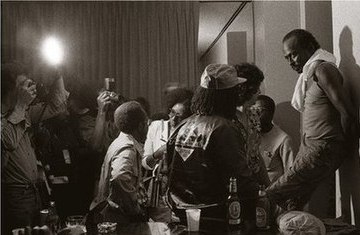
Above: Miles Davis © Frank Stewart.

ART NEWS
The Gallery at AYN Studio Presents
Stop Time: Jazz & Pictures

Posted: Tuesday, June 23, 2009

Featuring Chester Higgins Jr., Frank Stewart and Gediyon Kifle

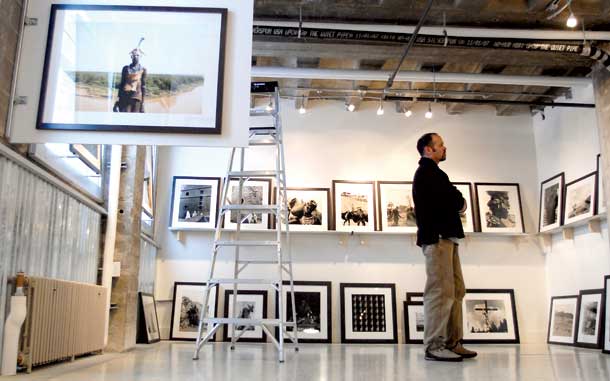
The Gallery at AYN Studio is pleased to announce the jazz photo show featuring artists Chester Higgins Jr., Frank Stewart, and Gediyon Kifle. Stop Time refers to a musical device frequently used in jazz, in which the forward movement of the rhythm seemingly stops to allow a soloist space to improvise and continue the forward flow of the music. Contrary to suggestion, however, the rhythm never stops…quite like the history of Jazz.


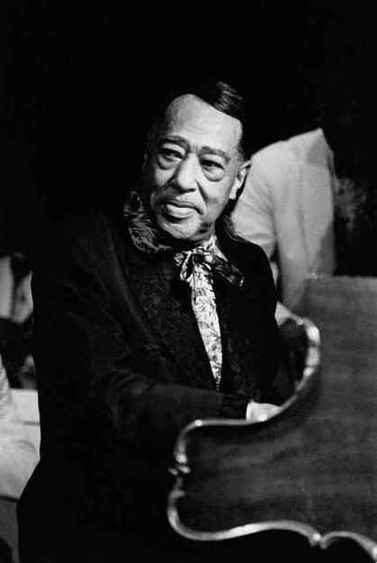
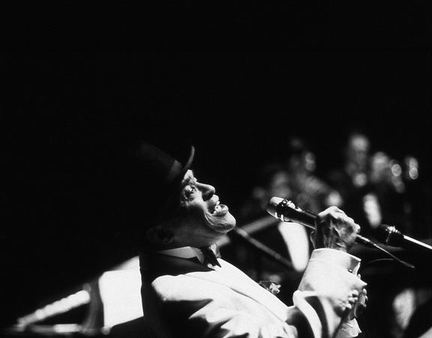
Duke Ellington © Chester Higgins Jr.

Stop Time is a collection of works by these three award-winning photographers who documented jazz legends from the 20th century into the 21st Century. Each photographer brings his own narrative twist to the great history of jazz icons. Higgins (New York Times and African-American heritage photographer) begins the show with a proud portrait of Duke Ellington to set the “rhythm” of the show. Stewart (NY Foundation for the Arts Fellows and Jazz heritage photographer) brings the uncanny intimacy the musicians have with their music as well as his own intimacy with the musicians, like in his photographs, Miles in the Green Room 1981, and in 1992 Sir Roland Hannah. Kifle documents the excitement of proximity and performance of the musicians. In works like Tommy Flanagan I, II, and III and Solitude (Wynton Marsalis) one can visually hear the soul of the musician and the energy of the audience.


Joe Hendrick © Gediyon Kifle

If you go:
Opening Reception June 25 (6 to 9 pm)
The Gallery @ AYN Studio
923 F street NW 201
Washington, DC 20004
202-271-9475

Gallery Hours: Wednesday – Saturday, 1-6 pm and by appointment

Girls Gotta Run Foundation Supports Ethiopian Summer Adventures

Publisher’s Note:

Monday, June 22, 2009.

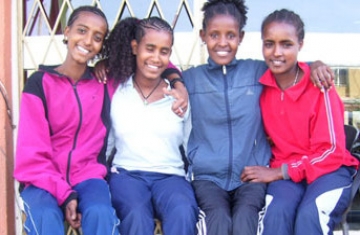
Dr. Patricia E. Ortman, a retired Women’s Studies Professor
and an artist, is the director of Girls Gotta Run Foundation.
Her organization provides new shoes for girls in Ethiopia who
are training to be runners. Here is an update from Pat:

TWO EXCELLENT ETHIOPIAN SUMMER ADVENTURES

Dr. Patricia E. Ortman

Hello! We hope you are having a fabulous summer. If you have time and
interest, you may enjoy following along or occasionally checking in on one
or both of the following blogs.

During the past year, we assisted a brilliant young woman from Occidental
College, Kayla Nolan, in designing a proposal to research the benefits of
running for Ethiopian girls and women. With it, she won a very competitive
fellowship her school offers to students to do summer research projects.
She is now visiting, getting to know, and interviewing, in depth, members
of all four of the teams for whom we provide some support, as well as
learning an enormous amount about Ethiopia in general. She arrived in
Addis Ababa on June 2 and will be there until the end of July. Although
the internet is erratic there, she is keeping a blog for anyone who wants
to follow along: click here.

This past Spring, we provided recommendations for GGRF supporter, WCA
member and full time Philadelphia middle school educator Bonnie
MacAllister in support of her application for this exciting
Fulbright-Hayes teaching fellowship program in Ethiopia. She was selected!
The group heads out on July 8 for a five week sojourn. You can follow
along here.

Meet GGRF-sponsored partners and supporters in this video.

13-Year-old Ethiopian Squash Player Shines at IOC Presentation

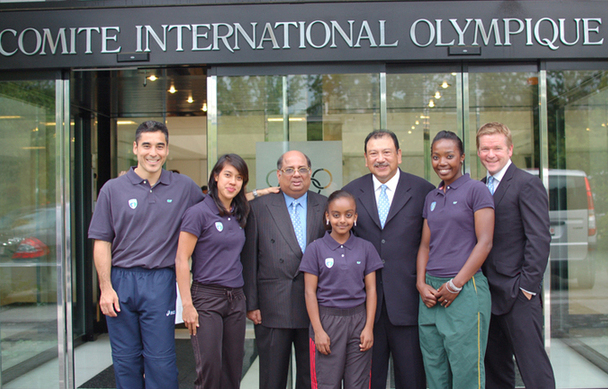
Above: A team of six Squash representatives made their
most important presentation so far to the International
Olympic Committee (IOC) Executive Board in Lausanne,
Switzerland. But it was the youngest member of the
group, 13-year-old Hanna Fekede Balcha, who was the
star of the show.

Source: Sports Features Communications

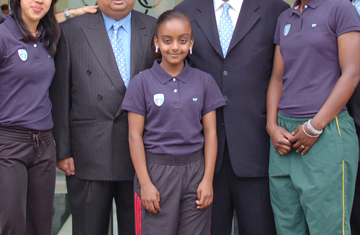
Today marked a crucial step for the sport of Squash in its bid for inclusion in the Olympic Games from 2016. A team of six Squash representatives made their most important presentation so far to the International Olympic Committee (IOC) Executive Board in Lausanne, Switzerland.

But it was the youngest member of the group, 13-year-old Hanna Fekede Balcha, who was the star of the show.

Hanna is Ethiopian, but her family moved to San Diego, USA, when she was nine years old to build a new life for themselves. Hanna was accepted to the Surf City Squash program in San Diego which enables students to play Squash alongside their studies. Through a structured programme which promotes hard work, both academically and physically, Hanna has progressed to being a Grade A student as well as Under 15 Urban Squash Champion. Her aspirations are now to push boundaries even further in becoming the first member of her family to go to university but also, at 20 years old, her dream is to represent Ethiopia at the Olympic Games in 2016.

Hanna said: “I was really nervous but enjoyed doing the presentation today. It has been amazing to travel to Switzerland and meet my hero, Nicol (David – world number one squash player). I feel like squash has given me so many opportunities that I wouldn’t have had otherwise that when I was asked to take part in this presentation I jumped at the chance. I would be so happy to compete at the Olympic Games.”

Hanna joined the team consisting of IOC Member and World Squash Federation (WSF) Patron, HRH Prince Imran of Malaysia; President of the WSF, N Ramachandran; women’s world No1, Nicol David of Malaysia; former world champion, Frenchman Thierry Lincou; and the up-and-coming South African, Siyoli Lusaseni.


The Squash 2016 Bid Team pose outside the IOC headquarters in Lausanne. (L to R),
Thierry Lincou, Nicol David, N Ramachandran, Hanna Fekede Balcha, HRH Prince Imran
of Malaysia, Siyoli Lusaseni and Scott Garrett, the Bid Co-ordinator.

Prince Imran introduced the team, and the Executive Board was then shown a spectacular video, highlighting a number of the key areas that squash believe make them a worthy candidate for inclusion. Among these were the progression the sport has made to be easier and more enjoyable to watch on television; the pledge that the top athletes would compete; the range of nationalities that would be represented (current rankings show there would be 30 different countries involved); and the low cost and accessibility of the sport around the world.

President Ramachandran went on to explain how the WSF has improved the infrastructure of the game, and the way in which the professional organisations work to ensure that Squash is totally ready to be easily incorporated into the Olympic Games. He also talked about the ease and low cost addition of Squash as well as how the sport can easily be hosted in any of the four 2016 bid cities.

The players each outlined why, as athletes, the Olympic Games are so important to them personally, and the many benefits which Squash can bring to people’s lives, and to the Olympics.

The full Squash 2016 bid video can be seen here at: http://www.squash2016.info/video/squash.mov

Ramachandran said: “I am very proud of the presentation we have put together and what we have achieved in getting this far. I believe that we have showed squash to its full potential. I know that we have much to offer the Olympic community, and I hope that the IOC will see the merits of our inclusion.”

Sara Tesfai: up-and-coming Ethiopian Female artist

Above: High School student Sara Tesfai is an up and
coming Ethiopian female artist who was born and raised in
Canada. She was raised by a single mom who supported her
talent from a young age. She started singing in church and
small gatherings at a very young age.

Ethiopian American Supermodel: Having Obama as President is “priceless”

Tadias Magazine
By Tadias Staff

Published: Saturday, June 13, 2009

New York (Tadias) – In a wide ranging interview with Hamptons Magazine, the premier lifestyle publication of one of the world’s most opulent communities, Ethiopian American Supermodel Liya Kebede discusses her new children’s clothing line, her upcoming movie gig, politics and more.

And what does Liya think of President Obama’s performance so far?

“Fantastic. It’s such a moment for us to have him as president. The way everybody sees America has completely transformed since he’s been in office, and everybody is looking up to him,” she told Hamptons.
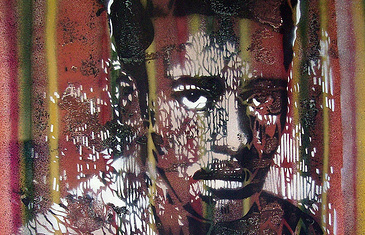
“For me and my kids, living in America, it’s so great to see a black president. I’m not sure I thought I would ever see it in my lifetime. And now for my kids it’s something normal, which is priceless.”
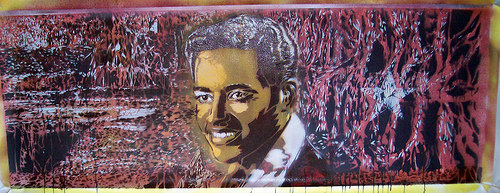
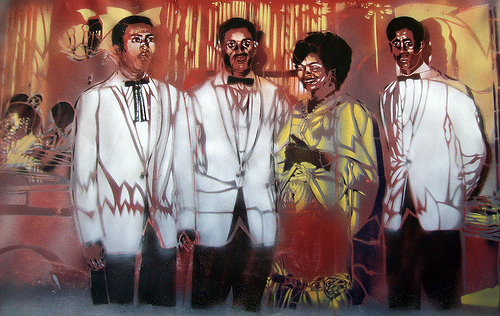
Read the interview at Hamptons-Magazine.com.
Related:
Interview with Sara Nuru: Germany’s Next Top Model

Tadias Magazine
By Tadias Staff
Photos by Oliver S

Published: Wednesday, June 3, 2009

New York (Tadias) – The following is an interview with Sarah Nuru, who was crowned Germany’s Top Model last month after she beat out 21,000 contestants to claim the coveted title.

Heidi Klum, the top model host, made the announcement in front of a packed crowd of 15,000 in the Cologne Lanxess Arena.

Watch the Video

The 19-year-old fashion model from Munich, whose parents
immigrated from Ethiopia, has earned the nickname “Sunshine”
from Germany’s Next Top Model, and was wildly popular with her
competitors.

Click here to read Tadias’ interview with Sara Nuru.

Grammy Nominated Singer Wayna Comes to Philly

Upcoming Events
Published: Thursday, June 11, 2009

NateBrown Entertainment Presents Wayna
Grammy nominated recording artist Wayna comes to Philly
for a special debut performance on June 18, 2009. It takes
place at Temptations Jazz Restaurant & Jazz Club (218 W.
Chelten Avenue Philadelphia PA 19144). There are two
shows: 8pm and 10pm. You can buy tickets at:
waynaphillydebut.eventbrite.com


More info about Wayna at: www.wayna.net